We had the chance to talk with composer Jason Graves about the music of Directive 8020!
I was honored to once again have the opportunity to talk with composer Jason Graves about the music for Directive 8020, the latest entry in the Dark Pictures Anthology series. We last had the opportunity to speak about the music of Still Wakes the Deep.
Graves has composed the music for most of Supermassive’s games dating back to Until Dawn in 2015. He’s also composed for the Dead Space series and Far Cry Primal among many others. I hope you enjoy this discussion about the music of the game.
…………………………………………………………………………………………………………
What inspired the sound of Directive 8020?
My very first conversations with Supermassive Games revolved around the diegetic corporate music, mostly the general vibe of the ship in terms of UI and telemetry sounds. I work very closely with Audio Director Barney Pratt throughout score creation and he always has wonderfully helpful ideas, especially for starting points of inspiration. A lot of work had been put into creating the sound design of the ship with FM synthesis, which has a specific clear yet obviously artificial sort of sound.
My first cue assignment was to lean into the sound of FM synthesis as much as possible and come up with a music ID to brand the Corinth corporation. Something short, evocative and memorable. But also benign and vaguely open to interpretation. I chose a three-note motif consisting of a large leap upwards with a small step down at the end. Possibly heroic or positive but tinged with that small fall off at the end.
Once I had the corporate ID and music complete, Barney tuned all the ship’s sounds to the same note as my music track, so all the music and sound design is literally in perfect harmony with each other. That is, until our inciting incident occurs. Then the ship’s sounds are all intentionally out of tune, clashing with any corporate music that is creepily frozen in its “come be a part of our family” positivity. It’s a wonderful attention to detail that we both very much enjoyed putting into place.
These same three notes that are draped in corporate positivity are also featured throughout the score in much more mysterious and possibly horrific guises as the story unfolds.
On perhaps a similar note, given your past work on horror games set in space, would you say any of this ended up being similar to your work on Dead Space? Or maybe it would be better to ask if Dead Space helped to inspire you when it came time to create the music for Directive 8020?
Ah, the old “stranded on a ship/planet in space sometime in the future and something is hunting you” plot! I’m sure there were some subconscious but tenuous links between those games when I was working on this score. However, the main crux of the stories and gameplay are quite different, and that’s where the soul of the music originates. It comes down to gameplay mechanics – combat (Dead Space) vs. stealth (Directive 8020).
You can only escape and evade, so there’s a lot of emphasis on anticipation and dread in Directive 8020. And I’m leaning heavily into the technology aspect of the story with mangled sounds originating from both synthesizers and acoustic instruments, which go a long way to produce that visceral “what IS that sound?” effect on the player.
Are there any ways this music links back to previous Dark Pictures games or is this completely separate?
There’s a simple idea we established in Little Hope that continues to be a creative thread throughout the anthology – the overall idea of pitches slowly bending or simply playing out of tune. We leaned more into the out-of-tune idea in Little Hope, which was very game setting appropriate (one of the time periods is in 1692). And each new game gave us a chance to feature that idea of bending notes a different way. It’s full-on orchestral action in House of Ashes and powerful, low bending electronic-based dread in The Devil In Me.
I know you said a lot of the music is built around a three tone motif. Is there a specific motif or general sound for the alien organism? If so, what was it and how did you come up with it? That organism is terrifying.
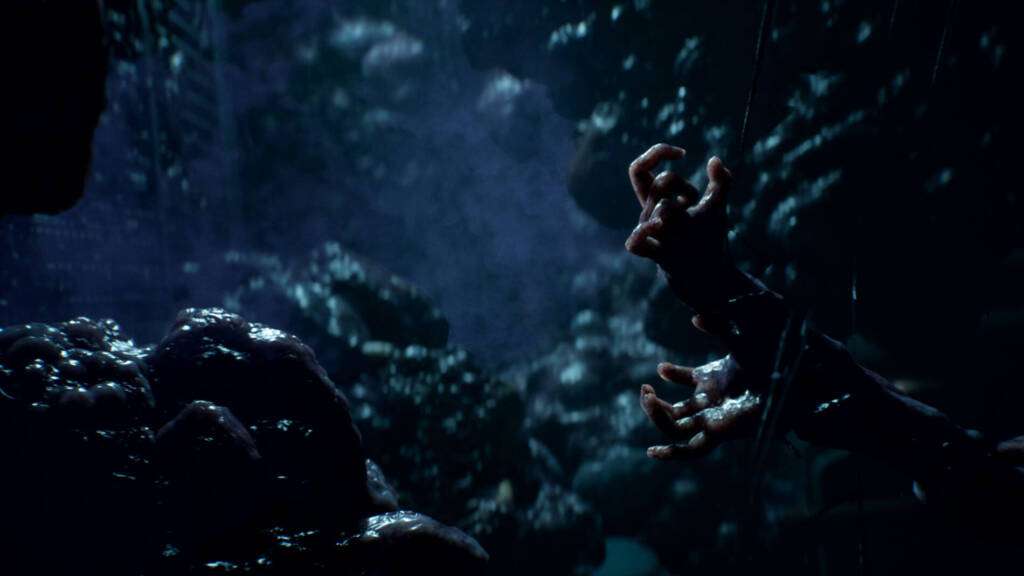
I know, right? I took the general idea of bending pitches even further in Directive 8020, mostly as a result of that shape-shifting organism. So we now have notes that bend, or shape-shift, over much longer periods of time. They can feel slightly mysterious or induce all out dread, depending on how much I lean into them and feature them in the score. But they are absolutely everywhere, sometimes hidden in the background until you really start to pay attention and listen for them.
Are there any musical hints for when the player is talking to an alien duplicate and not the real person? Or would that have made it too obvious?
We definitely didn’t want to give anything away with the music, so I was more focused on the crew’s point of view, which allowed the mysteries of the story to unfold on their own.
Are there any non-electronic instruments used? The synthesized music stood out most to me, but I was curious what else was used with it.
The synth sounds, especially the screeching, bending notes, definitely stand out! I also did a lot of acoustic instrument recordings, mostly bowed cymbals and cello playing, you guessed it, slowly bending notes. They definitely don’t sound like traditional cymbals or cellos in the score! Most were pitched down extremely low and time-stretched up to four times their original length, then processed with even more effects to give them an otherworldly, alien quality.
Do you have a favorite piece of music/favorite set of sounds you created for Directive 8020?
I very much enjoyed working on the two cues that feature the theme I wrote for Brianne Young – “Young Eyes Open” and “Young At Heart.” These two cues are actually the same piece of music, quite literally – the same tempo, the same key, the same cords, the same themes. The first is an orchestral version and the second a jazz trio featured in the game’s bar scenes. In fact, if you listen to “You at Heart” you can hear the orchestra and bending synth sounds from the other cue poking through the jazz trio from time to time. It’s like one piece is an exact duplicate of the other, but which is the original?
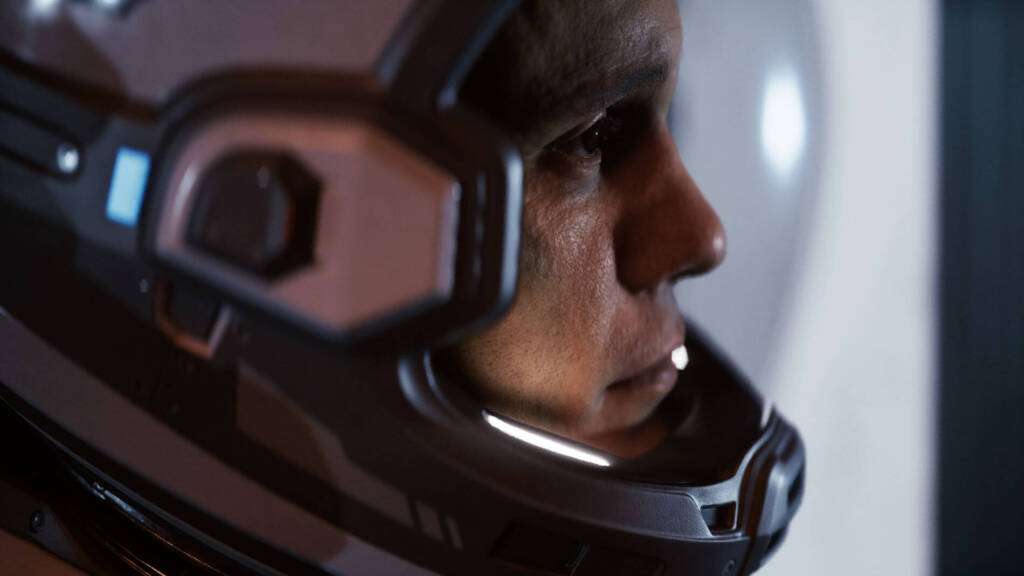
I love how the game’s prologue opens with no hint of what’s coming, there’s even that grand moment when the space walk begins and you get to experience the vastness of space. And then, post space walk, the switch flips and suddenly you’re neck deep in a horror story.
Agreed! I think the whole idea of balance and character development can solidify the game world in a player’s mind, especially when you give the story some time to breathe and the player can experience something other than absolute terror.
How do you plan a score around a game designed about multiple choice? How do you ensure each resulting scene based on the player’s choices retains a cinematic score to them?
That’s been a core concept in all The Dark Pictures scores that Barney and I began when we first worked on Until Dawn. The scope of these games are beyond anything that can be properly scored and detailed on a granular, choice by choice basis. That would be 10-15 hours of music! So we take a wider approach and consider other gameplay mechanics such as location, character and overall story. The focus of the music composition is less prescriptive and more overarching, so I have the freedom to use broader gestures and motifs.
That being said, I also have the benefit of working with Barney and his amazing team to implement the music into the game. They have extremely granular control over all the music and can dial in just the right amount of detail when the game calls for it. It really does take an entire team of people to properly implement a score with this kind of scope. The in-game music, and the game experience as a whole, would not be the same without their incredible talents!
………………………………………………………………………………………………………….
Thank you again to Jason Graves for taking the time to speak with me about Directive 8020.