

The 90s can easily be likened to the first gaming Renaissance, rising from the Dark Ages of the 1983 market crash with consoles like the Nintendo Entertainment System and Sega Genesis. The success of these consoles is largely due to the economic factors (the market crash was almost entirely centered in the US, giving the Japanese competitors the edge they needed to corner the market) but from a consumer standpoint, one of the biggest draws to this new age of gaming was the rise of the Mascot Platformer.
You already know the genre, even if you think you don’t. I can tell you exactly what it is in one word, even: Mario. That’s it. You understand completely.
With the success of Nintendo’s Mario Brothers series, developers were scrambling to follow those money-printing plumbers into their own share of the riches. Chief among them is the Blue Blur himself, Sonic the Hedgehog. Sonic brought a new dimension to the platforming genre: Mario games were about navigating precision and speed, Sonic games were about speed, speed, and more speed.
Sonic’s meteoric rise in popularity stemmed from both the high-octane nature of his games’ gameplay and the sardonic attitude of the main character, who had fully tapped into the “too cool for school” atmosphere of the 90s in which he was born. This level of popularity, as it always does, quickly gave way to copycat titles, with developers letting this new direction influence where they took their own games. Of them all, from the Sparkster the Rocket Knight to Aero the Acro-bat, no character claim the title of ‘copycat’ mascot quite as literally as Accolade’s Bubsy the Cat.
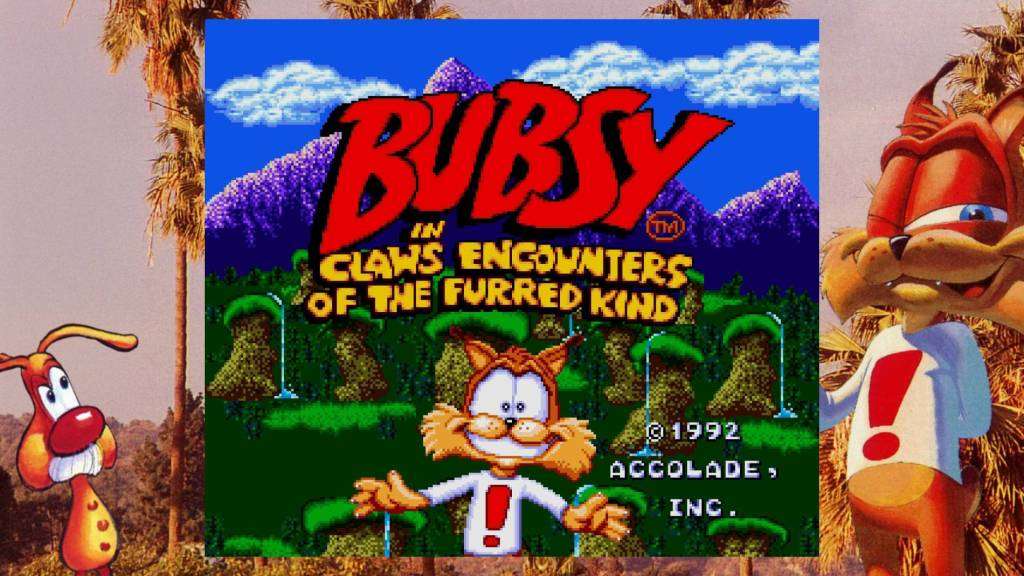
The Bubsy games were, in a word, undercooked. It was obvious from the original that the game was lacking a certain je ne sais quoi compared to its more polished counterparts. The sequel was more ambitious, but still only just mildly well received. Eventually, by the time Bubsy 3D rolled around in 1996 for the Playstation 1, it was such a massive disappointment that Bubsy was immediately relegated to “also ran” status, and, save for a few attempts in the last 2010s to restart the hype that never really got off the ground, no more new games were made in the series.
Now, dear readers, let us flash forward to the present day, in the year 2025. So many of these mascots have lain dormant in the wings of video game companies for years, relegated to mildly fond nostalgia if not memory-holed entirely. Many of those who survived in the memory of gamers did so on the occasional re-release in collection form, such as in the case of the Crash Bandicoot N. Sane Trilogy, or were simply held aloft on the currents of ironic internet memedom, in the case of the Bubsy series. And yet, despite all odds, Bubsy is coming back around once again in his first new release in years, Bubsy 4D. And in commemoration of this event, Limited Run Games has also released Bubsy in: The Purrfect Collection, finally giving the smirking bobcat a repackaged collection of his original games.
Which, of course, leads us here.
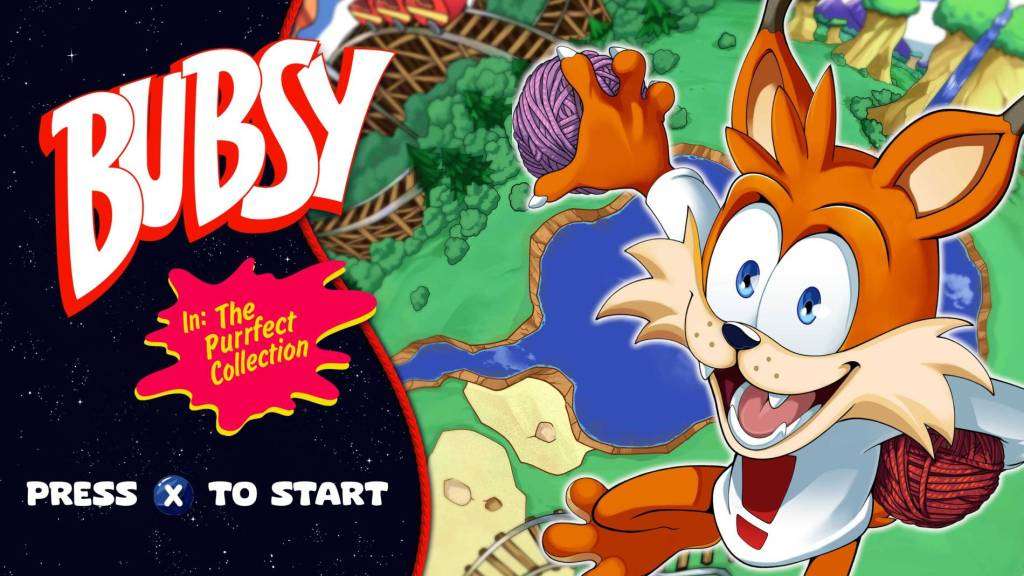
The Purrfect Collection faithfully gathers together the most well-known of Bubsy’s early adventures, and includes a few more rare titles to boot. Furthermore, the Collection, uninterested in half measures, collects every version of most of these games where multiple versions are available. As cool as it is to be able to instantly go back and forth to see the differences between the Super Nintendo and Sega Genesis versions of the games, though, it still ultimately means that the supposed nine-game collection is really just four games in total. Also the Super Nintendo versions are generally just superior across the board.
As far as the games themselves, I could go over each of them in depth, but when it comes down to it, each game (save one, which I’ll get to) is pretty well just a fully faithful rendition of its original release: The SNES Bubsy in: Claws Encounters of the First Time plays just like I remember it playing back on my own console in the day, just like the Genesis version of Bubsy II felt like it did when I played it at my friend’s house back then. Limited Run was faithful almost to a fault here, including the original Game Boy port of Bubsy II that was so maligned at the time (and rightfully so) that the developers also included a warning before you even start the game up.
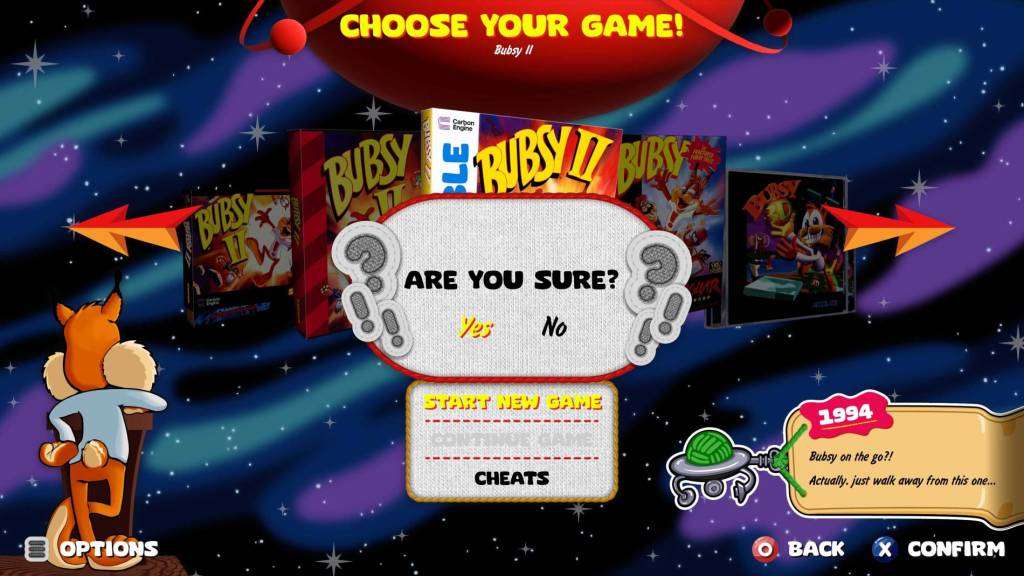
Otherwise, though, the games are… fine. The original Bubsy is the least likely to ever live down the “Sonic clone” title, a frantic, fast-paced platformer that includes even larger and more openly-explorable levels than its inspiration, but at the cost of massively increased fragility. Sonic the Hedgehog managed the speed of its game against the dangers of the obstacles in a level with the way its golden rings worked: as long as you have at least one ring, Sonic doesn’t die when he touches an enemy or obstacle, but he does lose every ring in his possession (unless he can chase them back down in time). Bubsy foregoes absolutely any kind of hit protection, which means that as soon as you get flying through the level too fast, you’re almost guaranteed to run into a Woolie (Bubsy’s alien foes) that you don’t have the reaction speed to deal with even back when you were six, much less now. It’s frustrating, but looking past it, you’ll find a game that is honestly dripping with charm. The animations and poses that the artists created for Bubsy truly did go above and beyond a lot of the other competition at the time.
Bubsy is one cool cat, and he wants you to know it. His idle animation is simply him standing there, leering towards the camera like he’s aware you exist and doesn’t think you’ve got the guts to push a direction on the controller again. He sets a look of fierce determination when he glides through the air, turns into a giant tussle-cloud like the old cartoon catfights whenever he jumps on an enemy, screams in abject terror when he sees he is falling from too far a height, and looks just as miserable as you’d expect a cat to look when he’s forced to be exposed to water. Honestly, it’s great. Almost great enough that you can look past the puntastic level names and canned one-liners that Bubsy spits out in crunched-up MIDI squeaks that begin every level, and repeat when you die and have to start over. Every. Single. Time.
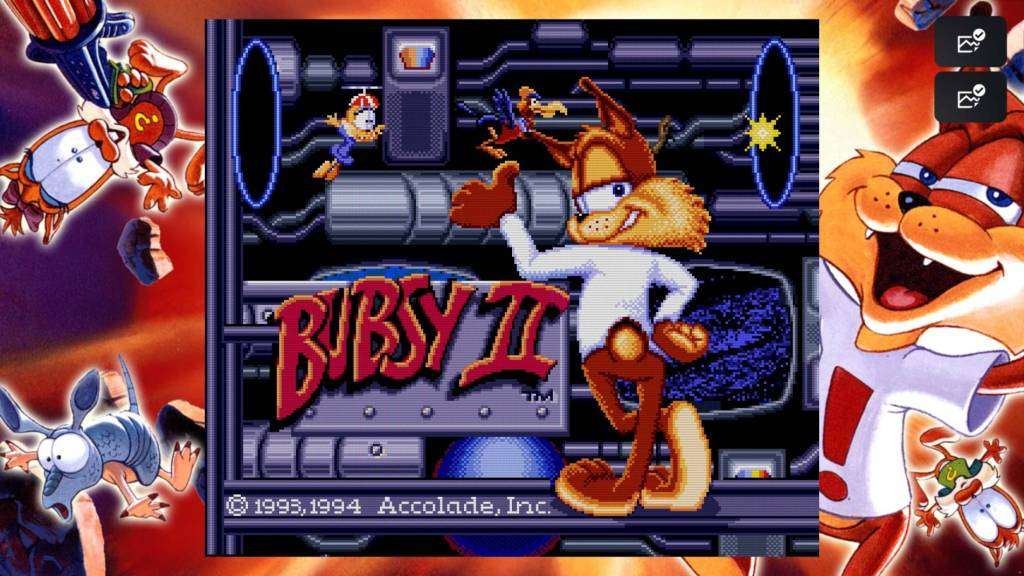
Bubsy II keeps the same attitude, but provides some expansions to the core gameplay, including some hit protection and a new weapon/accessory system. Even so, its hard to say that it truly improves on the original. The level design feels completely insane, taking the giant open screens of the original and replacing them with giant mazes with little hint on where to go. Huge walls and long floors cut these maps into smaller segments, usually separated by interactive doors, making the sort of free-range adventuring of the original a thing of the past. The consistency of the levels has been replaced by a new setting called the Amazatorium, which essentially acts as a hub world to take you into a series of discrete levels that you can choose to tackle in any order. You can tell the original devs were just throwing anything to the wall to see what would stick, and didn’t even seem to worry too much what stuck where: in one of the first wings, you can visit a world that, from the Hub, appears to be a pirate-themed level, depicted with a big sailing ship. Once inside, however, you are treated to a level entitled “Star Boars,” that is 100% a sci-fi themed level. And yet, for some reason the music is still a MIDI attempt at a sea shanty.
Bubsy in: Fractured Furry Tales was an oft-forgotten entry into the series that was only on the Atari Jaguar, a console that most people tend to be aware of, yet have never seen in their lives. It’s a decent enough game, taking advantage of the PS1’s graphical quality to provide a more hi-fi take on Bubsy’s adventures, but the levels aren’t as wide and interesting to explore, and in the end, there’s little meat to chew on here past the updated graphics.
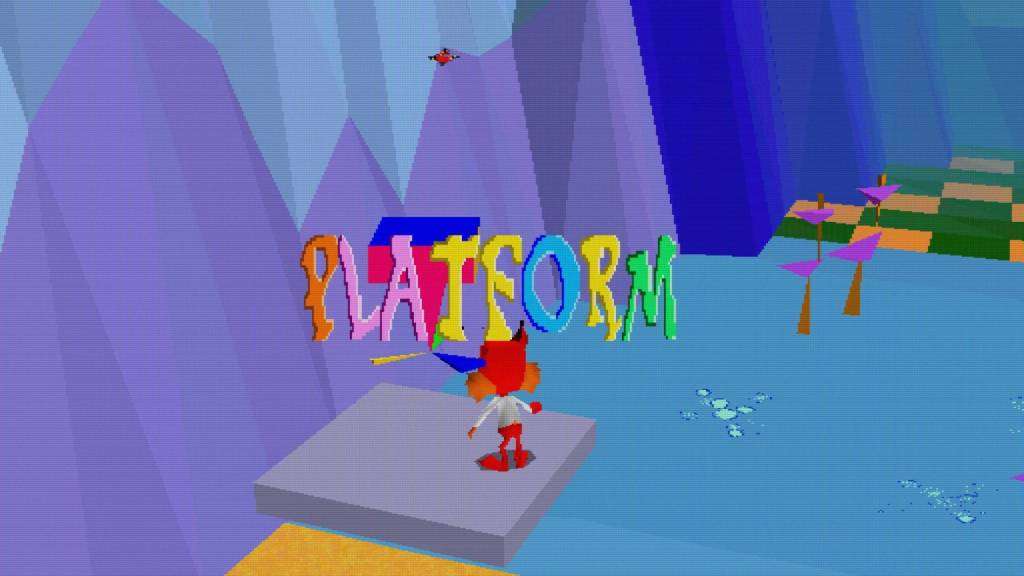
And then there’s Bubsy 3D.
It was a terrible game, so legendarily so that it was enough to tank the entire franchise (which had already been struggling, admittedly) and render the existence of Bubsy to little more than a joke on the internet or YouTube retrospective fodder. The most often cited reason for the game’s failure was its controls: developers were still getting used to the new technology involved in 3D platforming over the series’ prior staple of 2D platforming, and the end result here was a Bobcat that handled less like the feline and more like the dirt loader.

Limited Run did decide to step in for this one, offering a secondary option for Bubsy 3D known as the ‘Refurbished Edition,’ which probably also scores the dubious honor of being the most subtle cat pun the series has ever attempted. This edition swaps the dodgy tank controls of the original launch for a more modernized analog control experience. Unfortunately, this only increases the playability of the game so much. The original tank controls provided a sort of slow weight to the game, which certainly held it back in every single instance of platforming, but when it came to engaging in the time-honored platforming combat tradition of jumping on enemy heads, the original controls excelled. The camera would swap to an overhead view with every leap, which, while jarring, allowed the player to fine-tune their landing to ensure they’re dropping on the Woolie before them. The Refurbished version removes this camera swap, forcing the player to manually move the camera themselves, requiring an entirely new axis of control to perform what should be the simple act of stepping on a mook. And when the mooks really start piling up, the ‘combat’ becomes more tedious than fun. Ultimately, while I can respect the attempt to bring the game up to more sensible standards, it seems like it’ll take more than a control scheme update to make it happen.
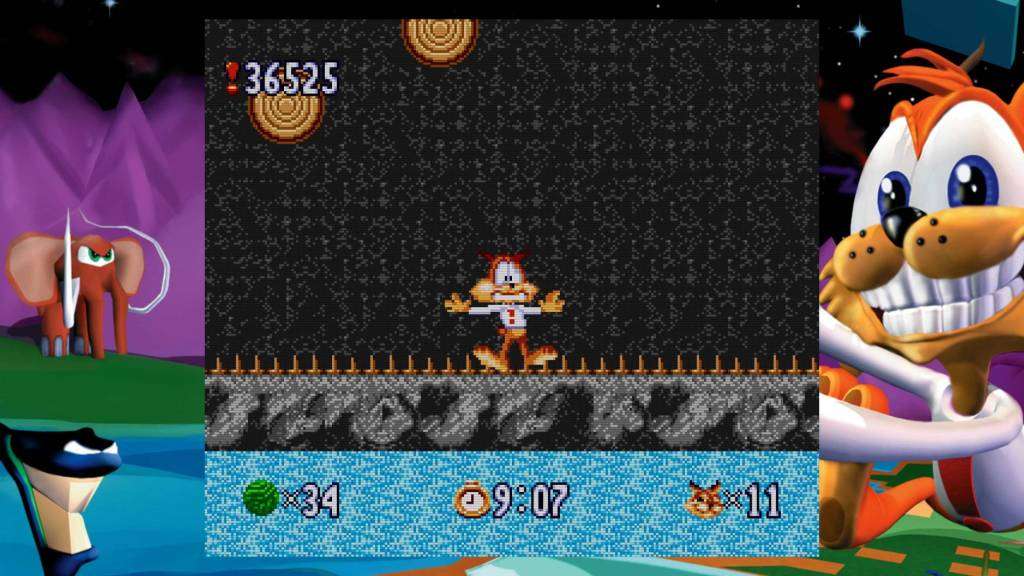
Moving on, the Purrfect Collection also features a series of quality of life improvements for every game, including manual saves, immediate rewinds, and built-in cheat codes. This absolutely provides an answer to the unforgiving difficulty of practically every single one of these games, but also leaves the player to decide if what they’re doing is an act of entertainment or simple stubbornness at some points. Even so, these are welcome additions and go a long way to making these games more accessible to modern audiences. There’s also a CRT filter, widescreen support, and a whole series of fun backgrounds to fill the screen when you aren’t using said widescreen. I tried to use a good mix of filter/no filter and each background in my images so you can get an idea of what everything looks like, but I was always partial to the 3D era backgrounds since they make Bubsy look the most like some sort of crack addict:
Finally, the Purrfect Collection would not be complete without a bevy of extras, which could very well be the highlight of the entire thing. There is a music player that contains every track from every game collected for your listening pleasure, and even though it commits the cardinal sin of not keeping the music playing while you peruse other menus, the sheer volume of songs included will be a welcome addition to fans of the music. Beyond that is also the “Mewseum” (because of course) that collects a shocking amount of additional Bubsy media for you to look at. I had expected to see the fully-reprinted manuals for each game in here, to be sure, but the inclusion of all of the print ads for each game was a welcome surprise as well. It was even more surprising to find that the design documents for all of the included games were also scanned in and packaged, however. These docs are a treasure trove of interesting tidbits of information for those who seek them, including some hard confirmation in the original Bubsy docs of how the game was fully intended to ape the blue hedgehog’s series.
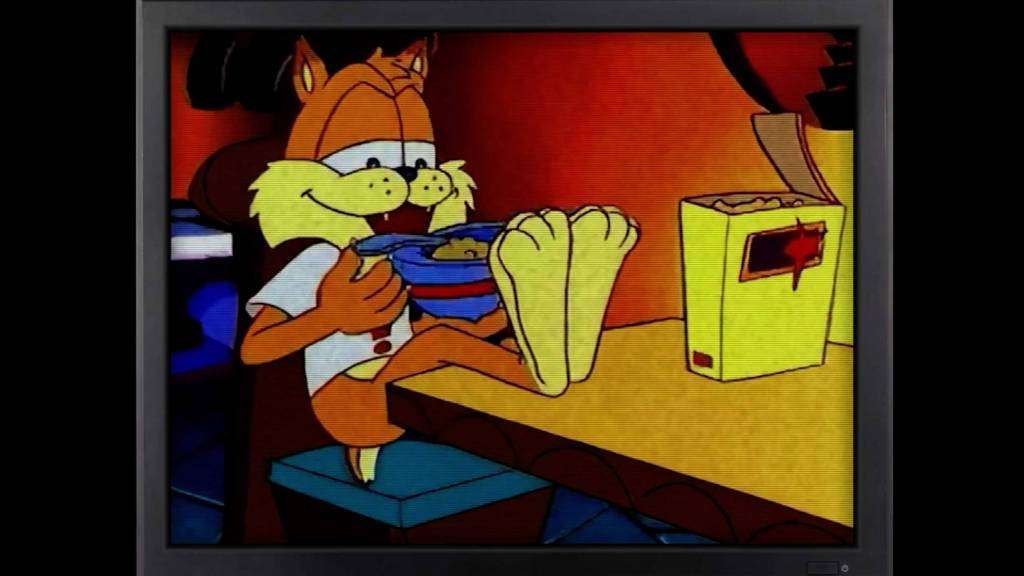
And if that’s not enough, you can also watch the entire pilot episode of the ill-fated Bubsy animated series that was never picked up for a full season!
Bubsy in: The Purrfect Collection is just a strange thing to properly review. The games themselves are distinctly and decidedly mediocre, the best of them maybe landing a 3/5 score, with an average that would get dragged down hard by 3D and the Game Boy Bubsy II. As a collection, however, it faithfully restores these games in a way that would absolutely please anyone who happened to be a fan of these games already, and packages in a bevy of extras that would be more than worth the price to those same fans. If you’re a Bubsy fan, then it’s probably an instant buy, but… how many Bubsy fans are really out there? For curious gamers, it’s a harder sell, but there’s enough substance here to make it, if nothing else, an amusingly competent gag gift for a gamer friend who likes platformers. And if that sounds like damning with incredibly specific praise, well…