
Sony surprised fans by releasing a “passion project” on the PlayStation store the same day it was announced at a PlayStation State of Play. Developed by Mega Cat Studio, this 2D, pixel art style “Metroidvania” game is set in the God of War universe. The game focuses on telling Kratos’s backstory through his own narration.
My initial reaction to Sony’s swift announcement of a God of War passion project was pure skepticism. However, after spending considerable time playing it, I’m genuinely pleased that I overcame my first impression and gave the game an honest chance.
God Of War Sons Of Sparta
Published by: Sony Santa Monica
Developed by: Mega Cat StudioPlatform: PlayStation 5
Release Date: February 12, 2026
The game immediately tosses you into the action, starting with young Kratos and his brother Deimos defeating a cyclops. This event is the catalyst that advances the story as they seek to understand the reason for the battle. However, when I say I “gave the game a chance,” I mean I dedicated several hours to actually playing it because at this point I was still wondering why this was even a thing.
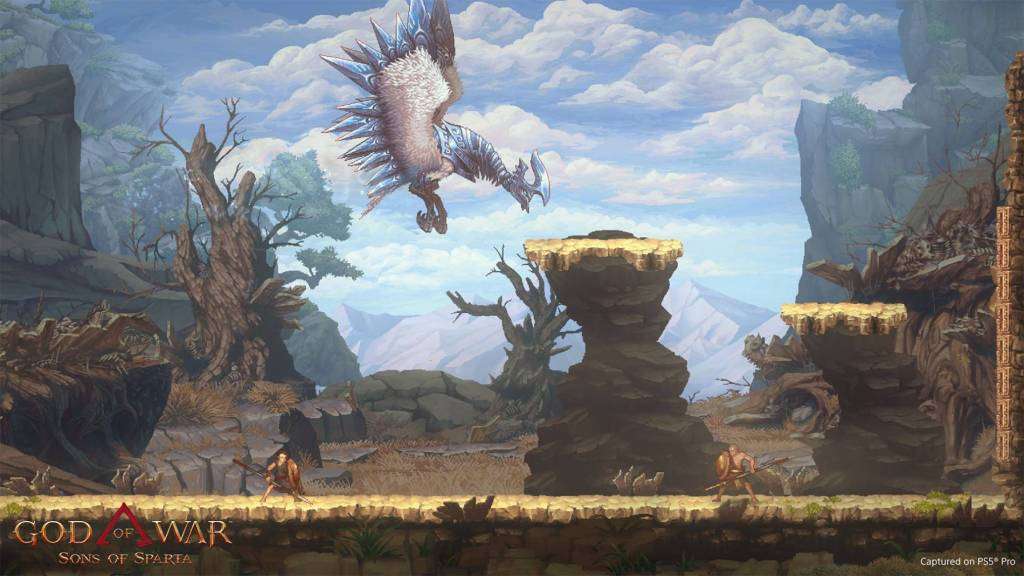
The initial stages of the game proved disappointing. Kratos’s underdeveloped character led to a decidedly un-epic and dull battle with the Cyclops. At this point, the early critiques about the slow, “floaty” combat, uninspired animations, and muted color palette seemed accurate. However, the game rapidly improves once you move beyond this early segment, quickly becoming a worthwhile experience.
Initially, the combat is frustrating because, like in older God of War games, players expect button-mashing chaos with flashy moves—a style reminiscent of a fun 2D side-scroller. However, the game instead slowly introduces these mechanics, which can lead to early criticism from players who might quit too soon. The elements that feel absent at the start are intentionally withheld, and as you advance, each new perk significantly improves the game’s flow, making the combat much more satisfying than the initial battles suggest.
The journey to these points is a slow, tactical crawl, reminiscent of the dodge-and-swing combat in Demon’s Souls. My initial approach lacked any real strategy beyond simply keeping the enemy animations in front of me. Challenging enemies soon became easy to read, and once I grasped their patterns, I was breezing past them, even with a low-level Kratos as my weapon. It became rather apparent that you could cheese certain enemies quite easily.
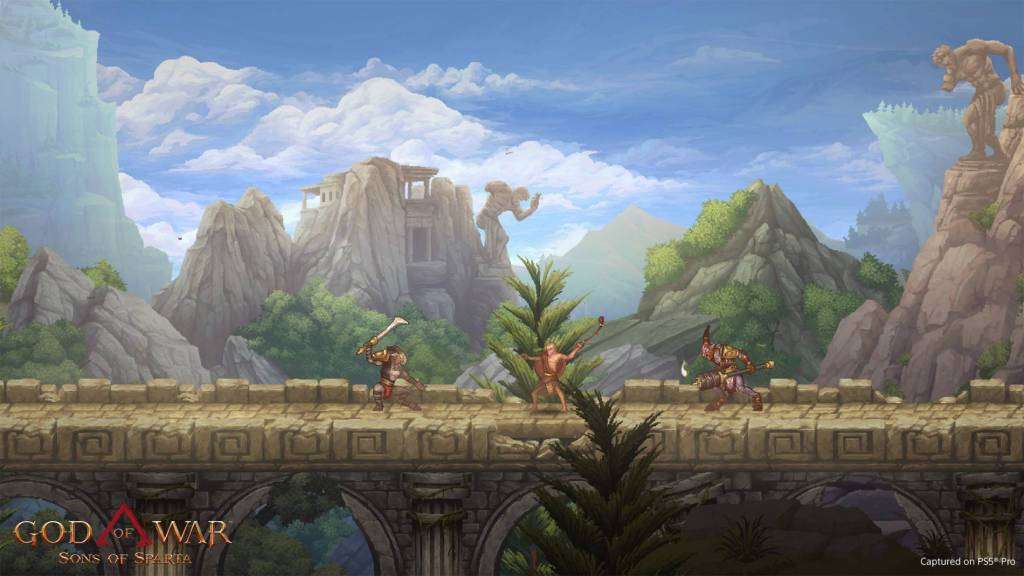
On normal difficulty it is easy to figure out the patterns, while on harder difficulty the different color based attacks mean a little bit more. Each enemy will have various degrees of attacks that are color oriented, which then have to be countered by you defensively. Blue has to be blocked, red has to be dodged, yellow can be parry, and purple is basically move bitch get out of the way, aka it can’t be dodged or blocked.
However, the game features a distinct and sudden difficulty spike. While I was able to learn enemy patterns and essentially “cheese” my way past this point, doing so became significantly harder on a higher difficulty setting. At a certain point in the game, it abruptly transitions from feeling too easy to being too difficult, particularly when playing on the higher setting. This is very apparent on both play throughs I had where the game literally hits a wall for me and a certain boss is incredibly hard to get past. From here the whole game shifts into a more strategic approach that utilizes its various combat mechanics. Not only do enemies have different attacks, but so does Kratos. Holding a certain button while attack will lead to health orbs dropping, or magic. Kratos can also slowly recharge the different bars when they reach a certain point also, but this is normally useless in chaotic moments.
Beyond combat, the game introduces more adventures through a gradual process. Players can essentially free roam the map, and the game excels at layering the exploration outward, delivering a God of War-style experience that evolves alongside the main game, much like the combat. This exploration element quickly became my favorite part of the game. I found myself engrossed for hours, exploring new areas, returning to previous locations with new abilities, and solving minor puzzles along the way. Especially early in the game, it does a fantastic job of giving you a new ability and instantly making you try to remember where you needed to use it. My main frustration, however, stems from the slow introduction of new mechanics. I often struggled to tell if I was engaging with a solvable puzzle or simply arriving in a room before I had the necessary ability. It was disappointing to feel like I was on the verge of a breakthrough, only to discover I lacked the simple unlock mechanism for the room.
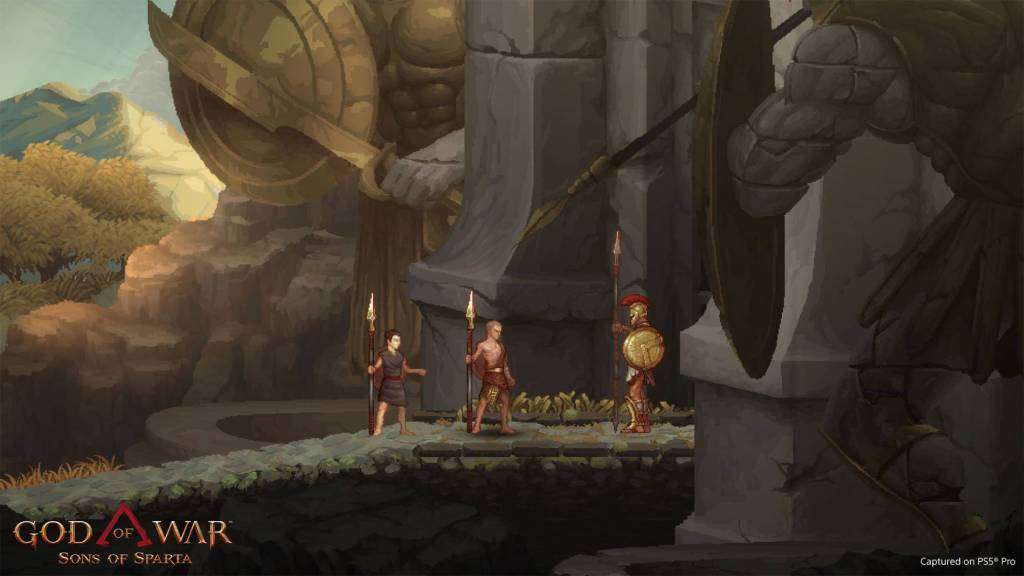
The game’s conservative adherence to its genre disappointed me most. The boss battles felt largely one-dimensional, and discovering new areas was typically a simple matter of returning once the correct tool was acquired. Progression into certain zones often just meant grinding for orbs to extend the playtime. While the game executed its mechanics capably, it never risked doing anything new or memorable. Consequently, there was no ‘wow’ factor or exceptionally fun element; it’s a title that does everything well but ultimately fails to stand out.
The narrative’s mechanics align well with the overall story. Kratos and his brother, who are very young and rarely leave the city, face disbelief regarding their encounter with the Cyclops. An interesting twist is the unexpected (As a GoW fan) portrayal of Kratos as a rule-following historian who plays it safe according to Spartan codes, yet cleverly reinterprets those rules to justify his decisions. This is a stark contrast to the strong-willed, more introverted Kratos familiar from the last two games. Then you also have the aspect of Kratos telling his story to his daughter, Calliope. Her frequent critiques, pointing out how his past actions contradict the lessons he taught her, force him to constantly question the moral and ethical implications of his choices. This dynamic interestingly adds some depth to the story while pushing forward the lore.
While the game eventually delivers the satisfying experience players anticipate, its initial pacing is notably slow, delaying Kratos’s development into the powerful character he’s meant to be. The combat truly shines once later perks and abilities are unlocked. These moves are more dynamic and flashy, transforming the gameplay from initially slow and clunky to swift and enjoyable.
The game’s strength lies in its metroidvania-like progression, allowing players to customize Kratos’s skill set and perks to suit their preferred playstyle. This, combined with the wide array of available combat tools and moves, significantly enhances the fun factor in the later levels, even if the level of gruesomeness never reaches its full potential. Once the game finally opens up it not only becomes a lot more fun to play, it also has a lot of flashy on screen objects and creative moves to unleash. You slowly start to feel the power of Kratos and why the franchise is so fun to play.
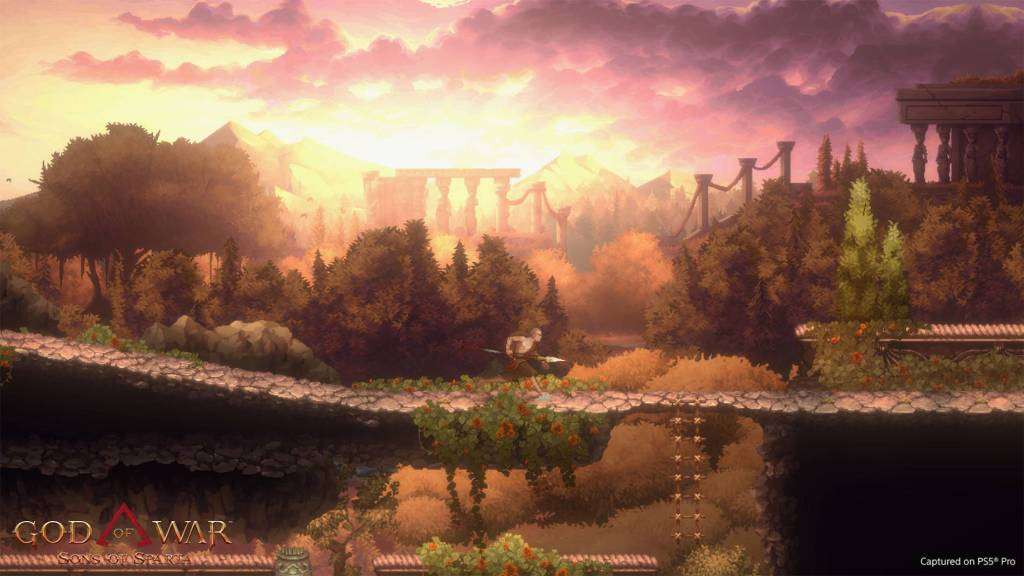
While the pixel art style is a decent choice for a retro God of War look, even though this style is before the franchise’s time, the color palette significantly detracts from the visuals. The pervasive washed-out brown tones make the overall environment uninteresting, even though they all look grand in scope. Furthermore, the basic animations contribute to a simplistic feel in combat, especially early on. The absence of dramatic finishing moves for Kratos is a missed opportunity for visual flair and excitement in the fighting.
Along with that, and acknowledging that the game portrays an earlier version of Kratos, both he and his brother’s designs feel uninspired against the game’s setting. The lack of compelling visual or character evolution for Kratos is disappointing, leaving me to question if a new player in the franchise would even find Kratos interesting at all. I felt like being a fan of GoW gave the game the opportunity to tell a story I was interested in, purely because I wanted to see Kratos backstory.
The fully voiced nature of the game is what ultimately salvages the storytelling. Had this been a text-based adventure, I likely would have abandoned the game early or rushed through scenes. Instead, the combination of a fantastic voice cast and an epic musical score truly elevates the experience, bringing the game to life in a way that sets it apart. This is the one area of the game that it shines on because it feels like a AAA production, and it is what carried me forward through the duller opening sequences of the game.
The overall feeling is that the game’s limited budget is apparent. While some depth and animations were included, they aren’t excessive or groundbreaking. The design choice to incrementally reveal content, seemingly to prolong the experience, suggests that the more substantial elements were reserved for the end. Fundamentally, the gameplay is a basic 2D platformer, merely given a “God of War” aesthetic, without delving into anything deeper. This lower quality would be more forgivable if the game were marketed as a budget-friendly option. However, selling it at a premium price point highlights these shortcomings significantly.
It’s a good game, but being God of War I expect more than “good,” and simply put, the game fails to take any leaps to get there.