

Rune Dice – if Slay the Spire, the ye-olde classic game of Marbles and Hungry Hungry Hippos had a very strange, but somehow relatable love child. Developed by Smart Raven Studio, Rune Dice is a dice-based rogue-lite that follows many of the familiar design ideas of a deck-builder.
Rune Dice
Developed By: Kwalee, Smart Raven Studio
Platform: PC (Reviewed On), PlayStation 5, Xbox X | S, Nintendo Switch
Release Date: May 19, 2026
The game begins with forcing the player to go through a three-round tutorial in order to get familiar with the mechanics. The map layouts will feel familiar to seasoned card-battler players, as well as the basic gameplay loop.
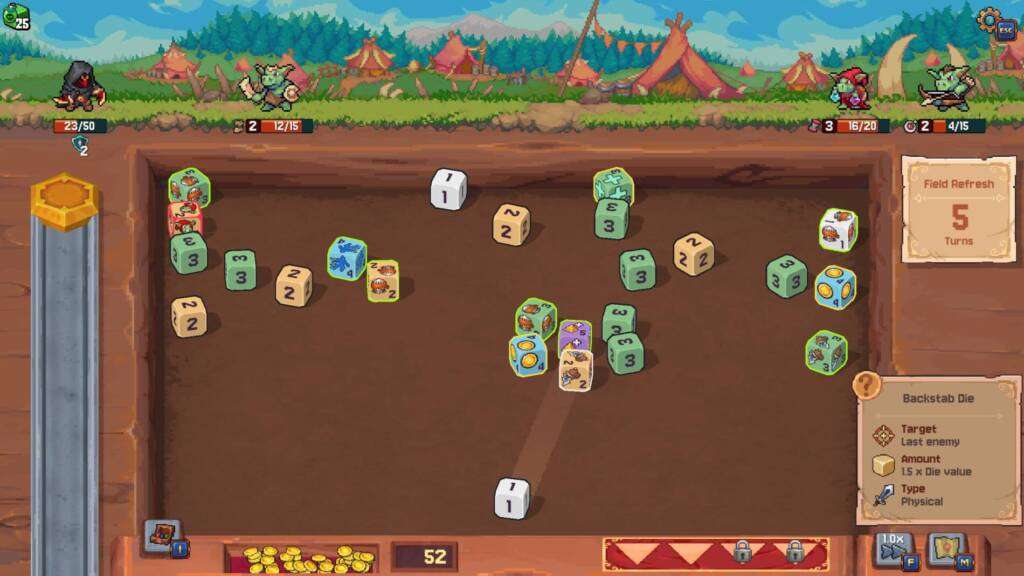
How Rune Dice differs, is in its absolutely crazy dice physics mechanics. This is perhaps the most satisfying piece of gameplay, and ranges from little knocks, to dice bouncing around the play field like an angry game of Boggle.
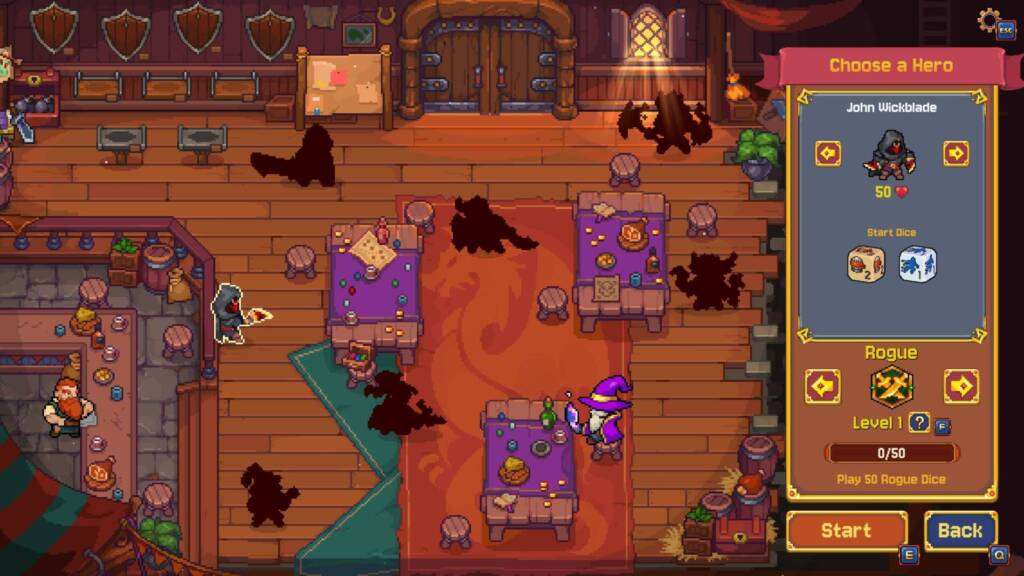
Upon entering the main hub post-tutorial, there are two characters to choose from; a rogue and a mage (both with excellent names). The rogue’s dice set feels balanced, whereas the mage’s dice allowed me to wipe the floor with the boss without breaking a sweat.
The variations in dice abilities offer individual challenges, but there is also a Hard mode toggle for those seeking further difficulty. If you’re as ADHD as I am, there is also a game/combat speed toggle to keep things moving.
During combat, the player is instructed to fling a die with a numeric value of “1.” As the die connects with, lands on top of, bounces around and smacks into other dice, they merge to create bigger numbers. Bigger numbers = bigger damage against enemies. On occasion, I found myself banking dice, billiards-style, to make sure specific dice merged.
To aid the player even further, runes can be collected at the end of successful combat scenarios, as well as from chests or in shops. Runes offer small advantages, such as temporary shield points, healing health, and adding elemental effects to dice.
There is only one map to speak of per run, instead of continuing on to a new stage. This keeps the runs to around twenty minutes, which feels right for a single session.
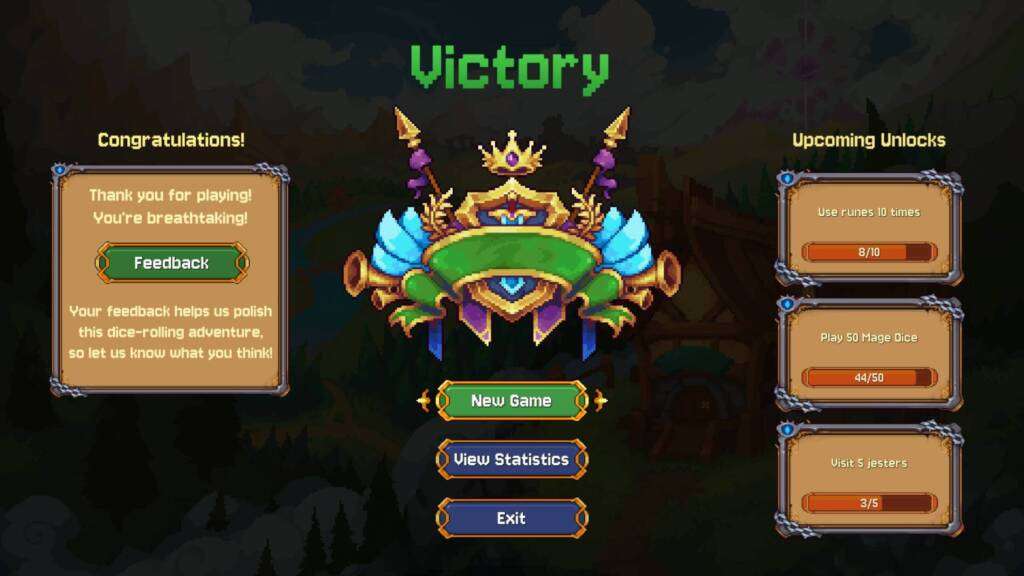
One thing that sets Rune Dice apart from other titles in the genre, is that the match does not end when the boss is killed. The player must defeat all enemies to be declared victor. This game loop can create some added tension, as there is little relief when the boss is felled while other enemies remain.
It’s also to be said that some bosses are much more difficult than the others, such as the poison-themed tree boss in the “Nearby Forest” zone. He took me an exorbitant amount of tries comparative to the other bosses in the zone. Still though, this forced me to try different characters and play styles to see what would land a victory, and is good for replayability.
As an avid fan of the genre, Rune Dice is great fun. The hand-holding and difficulty curves are just enough to get the player going, but then you’re on your own. Experiment with different character and dice builds, and carve your path to crazy physics glory.