
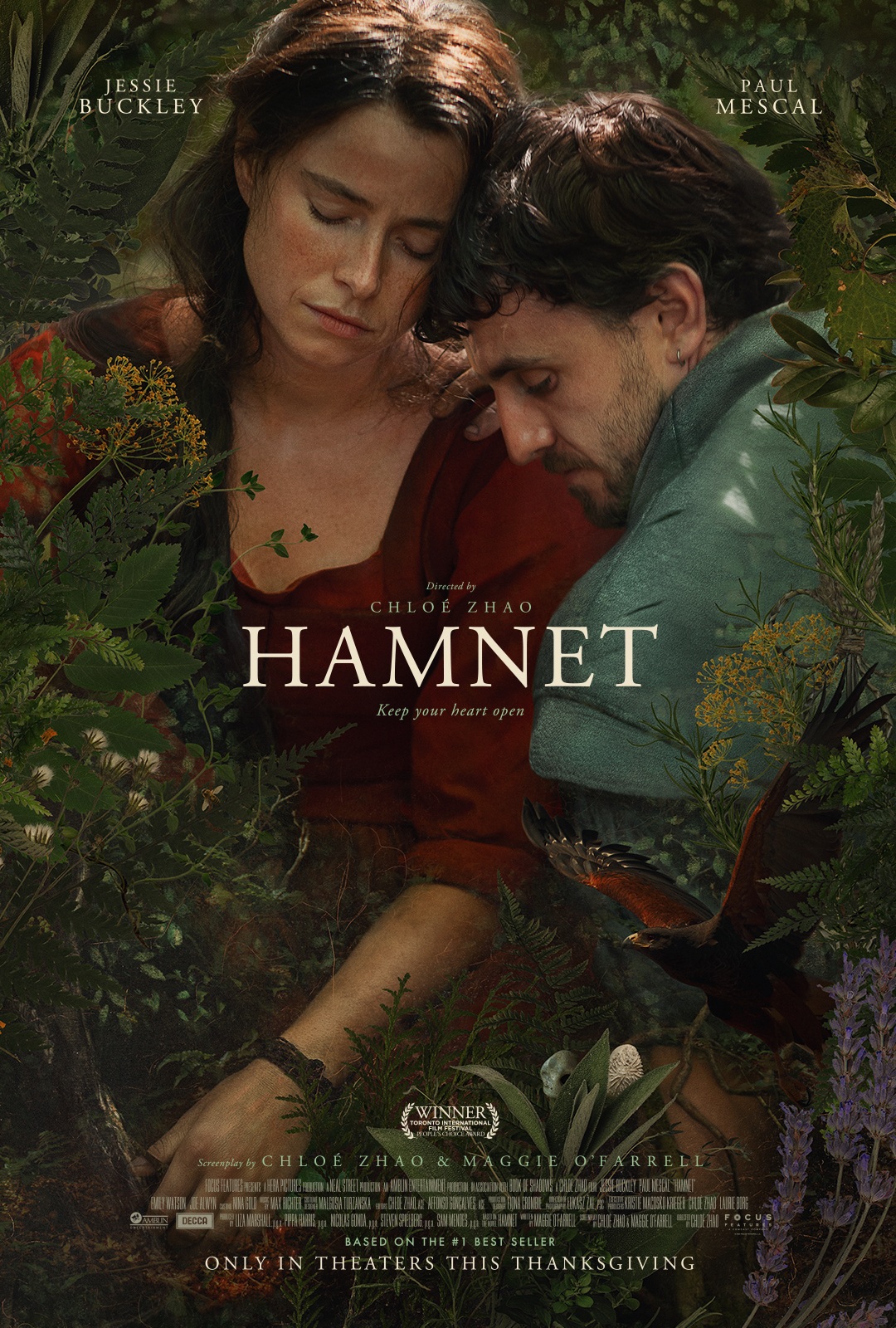
Chloé Zhao’s latest film, Hamnet, brings together a heartbreaking story of love, loss, and humanity while featuring some phenomenal performances.
Hamnet
Directed By: Chloé Zhao
Written By: Chloé Zhao and Maggie O’Farrell
Starring: Jessie Buckley, Paul Mescal, Emily Watson, Joe Alwyn, Jacobi Jupe
Release Date: November 26, 2025
Based on the novel of the same name, Hamnet is a fictionalized take on William Shakespeare’s (Paul Mescal) family life. It chronicles how he met his wife, Agnes (Jessie Buckley), their early days together, and how they struggled to navigate family life as he bounced back and forth between London. More specifically, it deals with the tragedy revolving around their only son, Hamnet, and how he inspired one of Shakespeare’s greatest works.
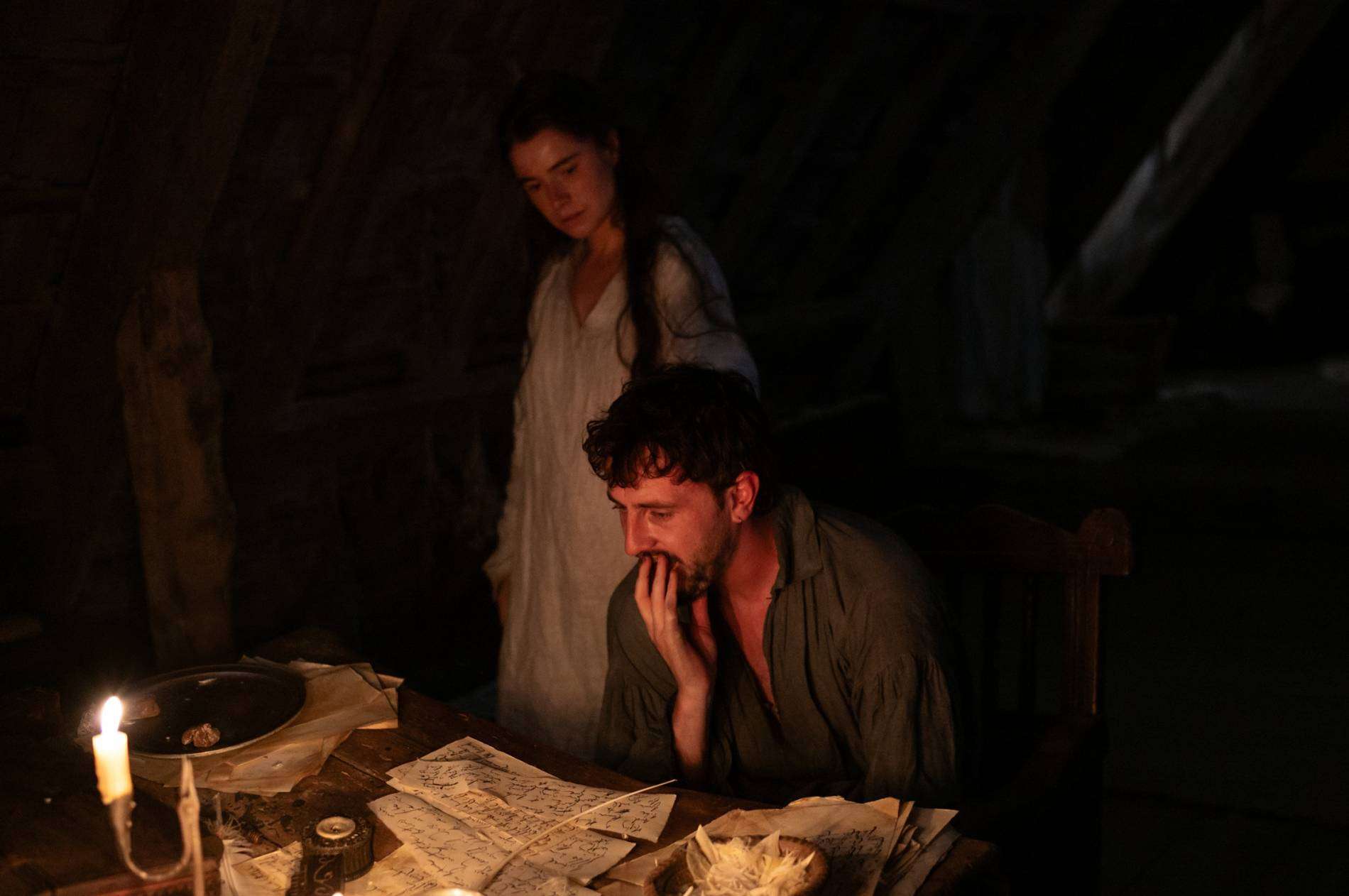
The story is told through a series of vignettes, picking up on different points in their lives and threading the story together. In this way, Hamnet isn’t designed as a typical historical drama about real people. Despite being a movie about Shakespeare, it very purposefully avoids dealing with his works for the most part. It’s not interested in telling a story about how his plays came together or virtually any of the things he’s most famous for. In fact, whenever he goes off to London, we don’t follow him (until towards the very end) and the film remains focused on his family waiting behind.
Normally, I struggle with these kind of movies. I much prefer the overarching narrative over the slice-of-life stories. And yet, Zhao has a phenomenal way of stringing these vignettes together in a way that manages to FEEL like it’s telling a more traditional story, in a more traditional way (something Nomadland did as well to great effect).
A big part of why it works is in the specific slices of life Zhao chooses to highlight on the screen. Some of the time jumps are small—days or weeks—while others span multiple years. There’s no set timeline for showing how their family journey unfolds. In lesser hands, this would tend to give a disjointed feeling to the movie.
In Hamnet, however, it’s an effective approach that makes each slice of life we’re shown feel vitally important. Otherwise, thanks to the structure of the film, we simply wouldn’t see it on the screen. It’s why the jumps in time are inconsistent in both timing and duration. This understanding forces audiences to engage with each sequence on a deeper, more immersive, level.
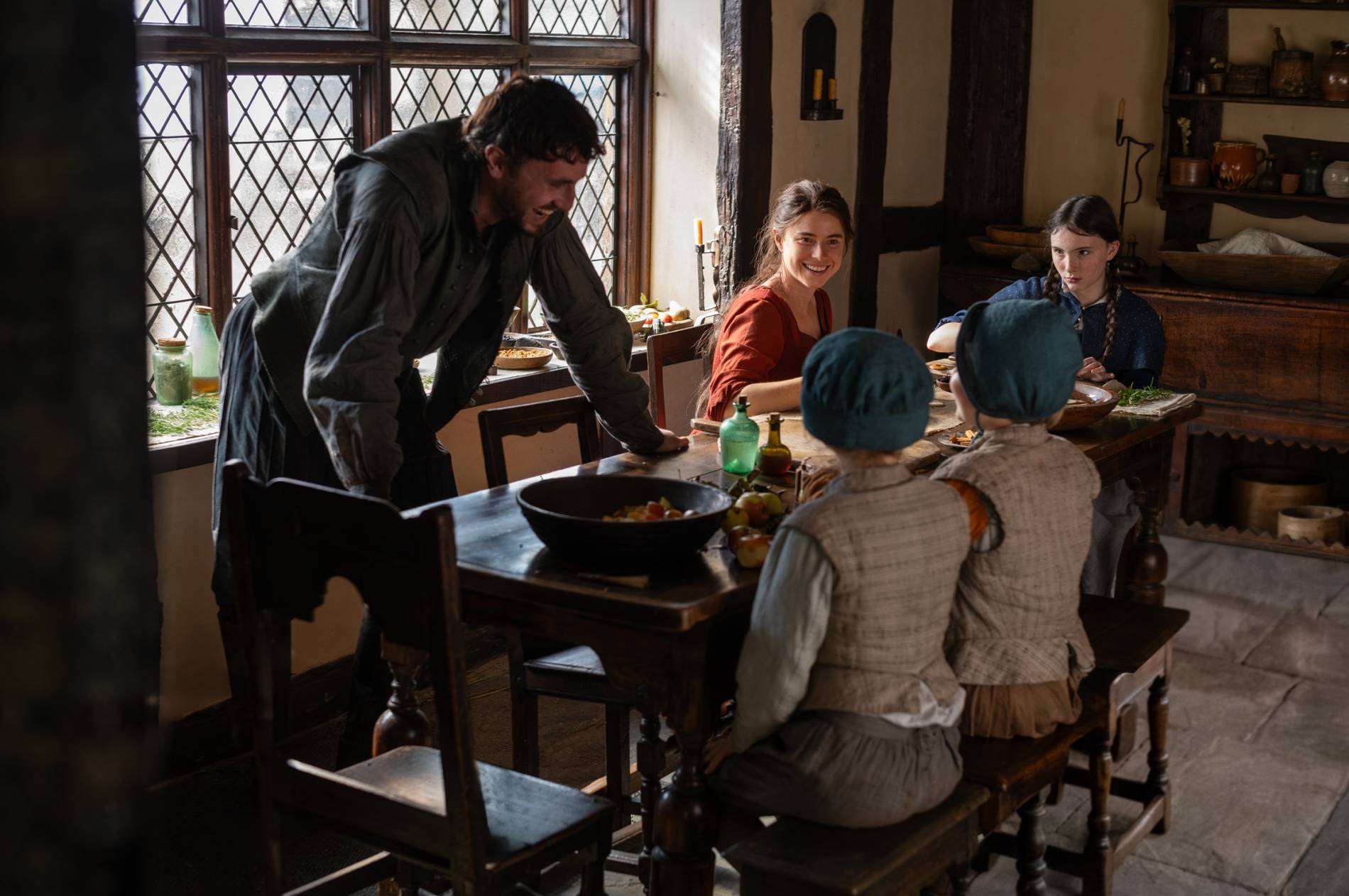
Even when the movie skips significant chunks of time, and drops us into something that feels mundane, there’s a sense of gravitas to it all. An understanding that something crucial is unfolding. The result are engrossing scenes made poignant because of the way they’re highlighted. They serve as a reminder that some of the best—or most impactful—moments in life are those smaller ones.
Without diving too deep into specifics, one moment stands out in particular that highlights the cleverness of this pacing style. There’s a sequence where Agnes’ hawk dies, and the whole family gathers to give it a sort of funeral. In the moment, it feels like a random moment. The hawk is important to Agnes, sure, but otherwise it just seems like a touching bonding moment between parents and children.
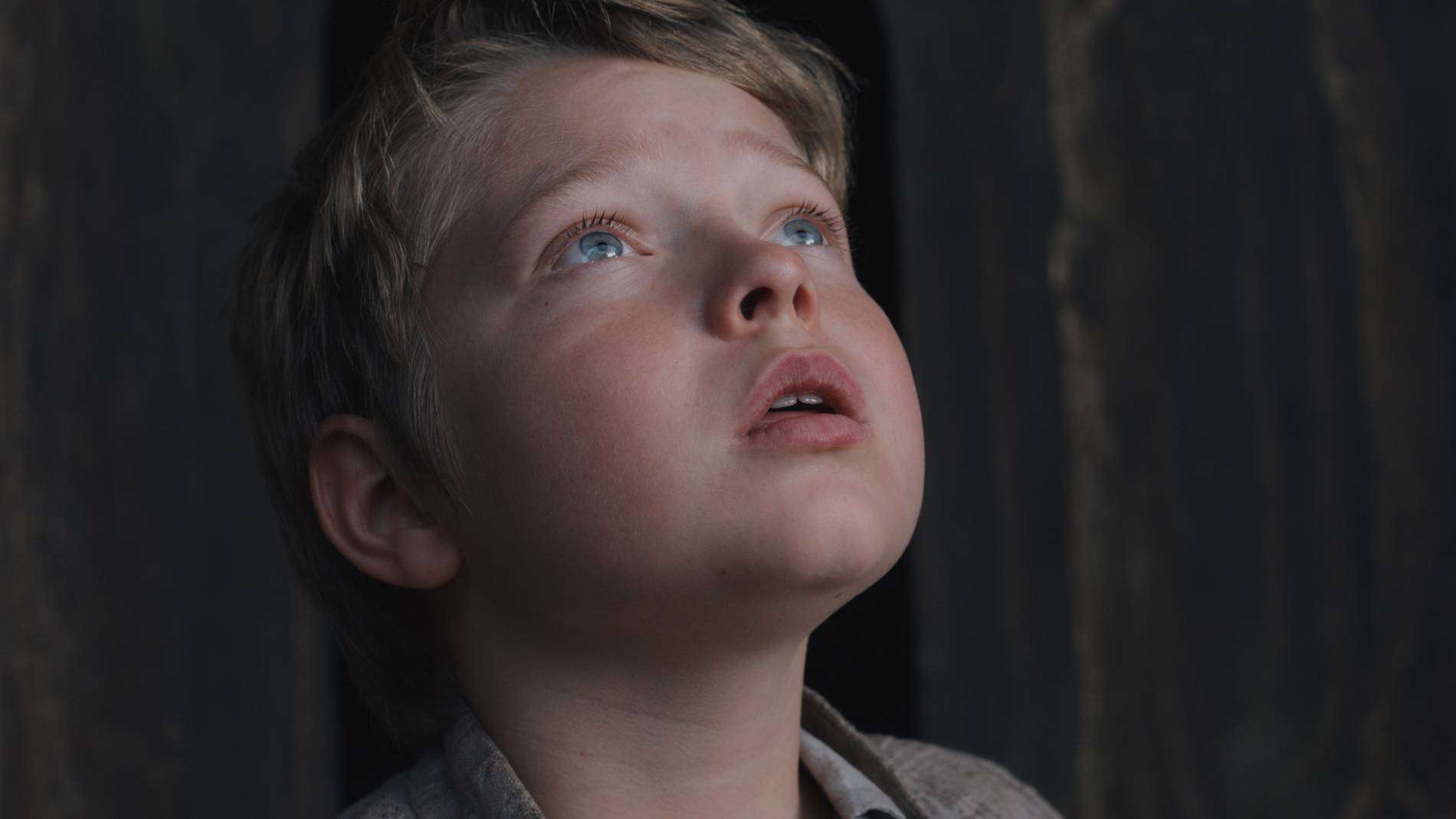
This interaction pays off in a big, emotional, way later on in the film. The type of gripping, heart-string-pulling moment that absolutely wouldn’t have the same impact if the film hadn’t taken its time to showcase one seemingly random moment earlier on. It’s brilliant, and the film is packed with nuances like this. Even better, it trusts the audience to grasp these aspects as they happen, allowing scenes to flow effortless without getting bogged down.
Accompanying this is Zhao’s craftsmanship. The way she frames shots, allowing the camera to linger on characters and draw out scenes, is stunning. Not only does it make for a gorgeous looking movie, but it creates a sense that we (the audience) are genuinely looking in on the lives of these people. We’re not witnessing actors playing roles, but are glimpsing another world—or period of time in this case—entirely.
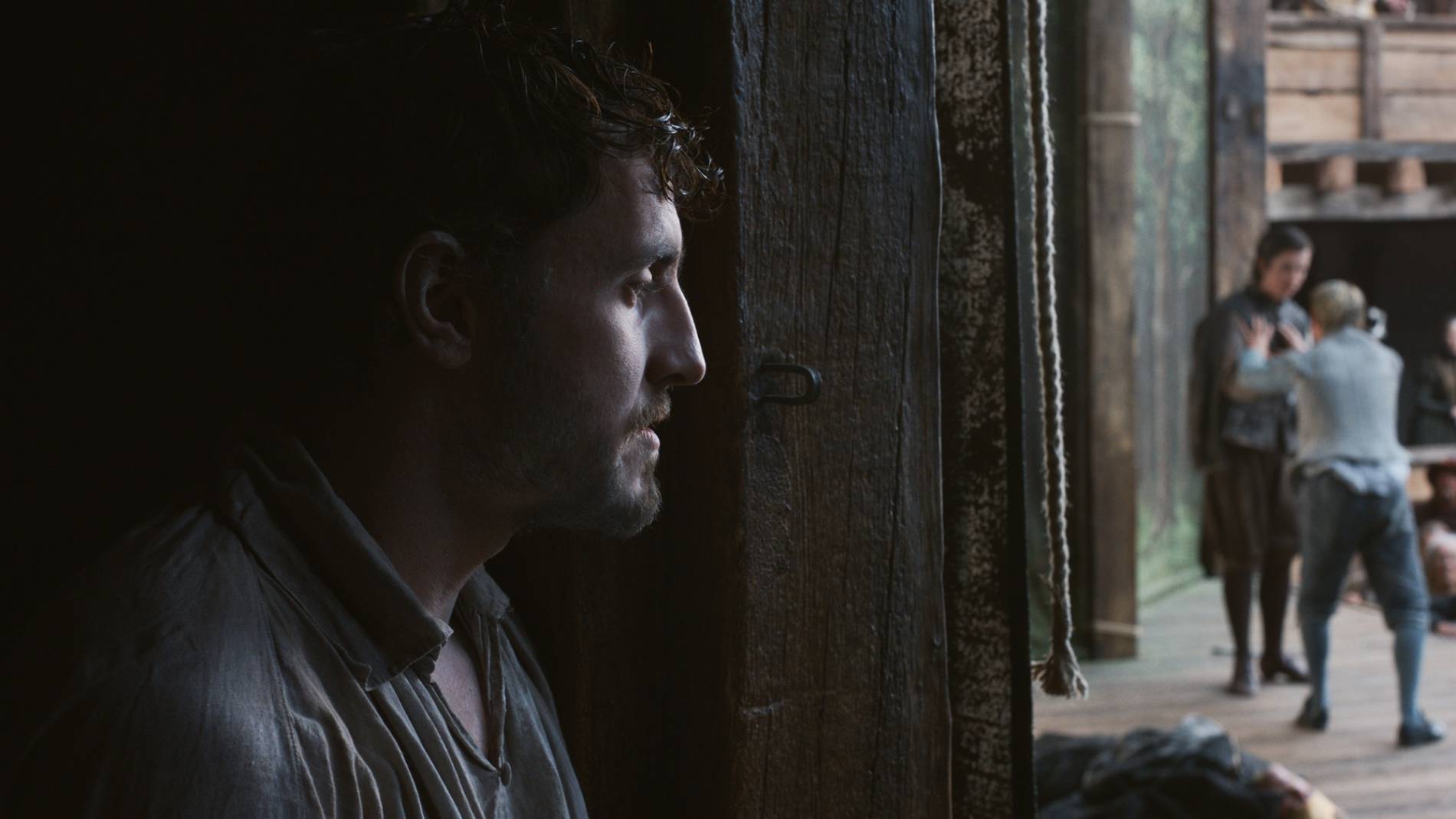
Of course, part of that effect comes from the fact the actors are giving stellar performances all around. I mean, I don’t think I can put down enough adjectives for how incredible Buckley (always a favorite of mine) and Mescal are in this movie. Powerful only scratches the surface of what we see on display from them, and the supporting cast aren’t slouching either. Perhaps even more impressive is how the children actors manage to keep up with everyone while delivering their own stunning moments as well. Hell, Jacobi Jupe’s titular turn as Hamnet brings about some of the most emotional moments in the film.
Where the film really got to me, and solidified in my mind that I was watching something transformative (or very near to it), is in the final act. It’s the most time we spend with William directly and his work in London, playing out as we watch Agnes watch, enthralled the play William wrote as a tribute to their son. It’s powerful on its own, but it also manages to tie together previous narrative threads I hadn’t considered related before this point.
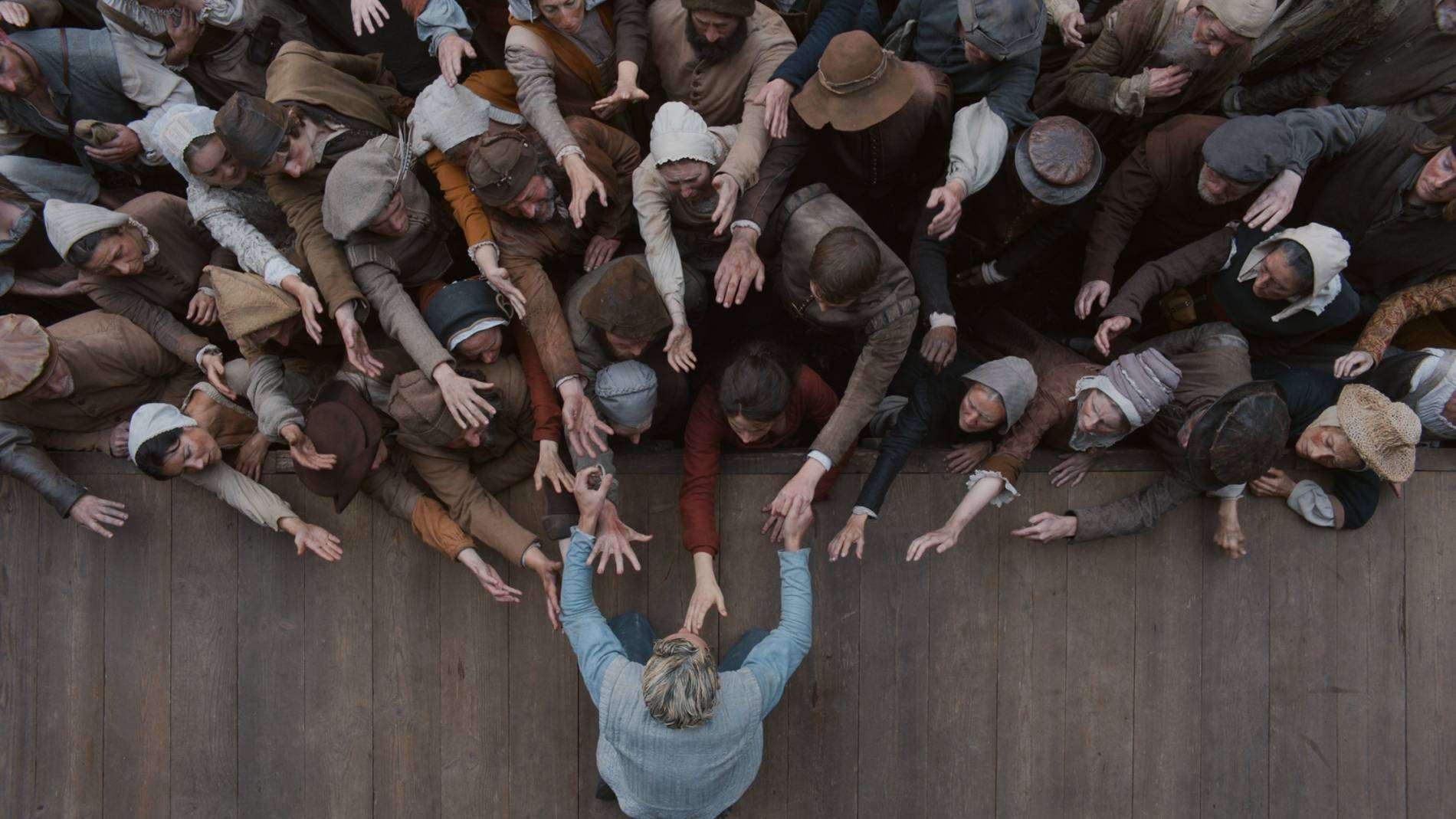
Ultimately, Hamnet is an exploration between art and trauma; examining how things that are considered “useless” provide the outlets needed to work through grief. It delves into the ways different people work through their trauma, and the toll it can take. More so, it highlights the power of art (in this case a play) and how it can move/influence those watching it; allowing for a shared experience even among strangers. In this way, even grief can be a burden taken on by others, lightening the load, and offering a closure of sorts.
Again, it’s impressive to watch it all unfold. The revelation of how everything pulls together makes the movie itself an experience in sharing grief and the importance of empathy.