
Despite my general disinterest in extraction shooters, I find myself repeatedly drawn back to Marathon.
Marathon stands out as a uniquely interesting multiplayer experience. While you can freely join and leave the game without immediate conflict, the game provides absolutely no incentive for friendly interaction. In fact, Marathon explicitly encourages players to eliminate their rivals, leading to an atmosphere where every other moving entity on the map should be viewed as hostile.
Marathon
Release Date: March 5th, 2026
Platforms: PC, PlayStation 5, Xbox Series X|S
Developer: BungieReviewed on: PS5
Marathon’s appeal lies in its flexibility. You can enter the map without the pressure of having to engage in combat, choosing instead to focus on extraction at various points. Whether you want to quickly grab loot and leave, or wait out the clock for tougher PVE events and a King-of-the-Hill-style final extraction point against multiple squads, the choice is yours. This adaptability, for me, is what makes Marathon enjoyable. It avoids the full-map wipeout requirement of a battle royale and the funneling into a central, camper-filled location, like other extraction shooters. While other games offer similar mechanics, Marathon, in its current form, strikes a unique balance, offering just enough breathing room to keep the experience exciting.
The enjoyment I find in Marathon stems from its non-combat-focused gameplay. Instead of engaging in constant battles, I prefer exploring the map and gathering loot with my partner, often finding more satisfaction in stealth and enemy avoidance. Having grown tired of the pressure to “win” by being the last one standing in battle royale games, I appreciate the freedom to navigate the field in Marathon. If a certain area feels too active, I can simply turn back, extract my loot, and start a new match. If we decide we have the proper gear to engage, we can do that too.
Everything great about Bungie is buried in every layer of this game.
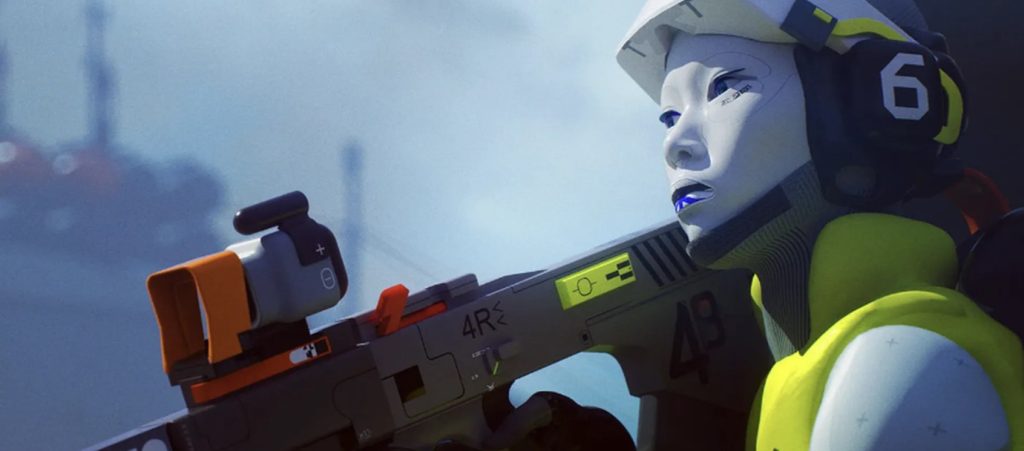
I genuinely hope Bungie develops a Team Deathmatch (TDM) game, as their gunplay remains unmatched—a quality clearly evident in Marathon. The gameplay is consistently fast, enjoyable, and features fantastic mobility. All the weapons boast distinct sounds, incorporating pulse vibrations and powerful blasts that are all easily identifiable. Even the visual design is intriguing, with ammunition clearly displayed on the gun and different sections lighting up and glowing as the player moves.
But Marathon suffers from a deeply frustrating skill imbalance that the game struggles to control. Even as an experienced shooter player who grew up with games like Halo, I’ve found the skill spike in Marathon to be highly volatile. A session can rapidly swing from securing valuable loot and extracting easily to being overwhelmed by an elite squad and losing hard-earned gear. For my teammate and me, encountering player-versus-player (PvP) zones on the map is now a source of pure dread, as these encounters have yet to be enjoyable. While we might win the 1-v-1 battles, it’s the swooping in from secondary players that take us out.
My primary concern with the game is the absence of a duo option, as of this writing. This forces my spouse and me into two unfavorable scenarios: either we rely on a random third player for our squad, which is frequently problematic, or we enter matches as a pair.
The issue with playing as a duo is that we are still placed into lobbies where almost every other team is a full squad of three. This immediately puts us at a significant disadvantage, as a 3-person team has a huge edge in flanking, coordination, and mutual support. Consistently facing 2v3 scenarios is not enjoyable and is often compounded by sparse ammo and weapon availability, which has severely diminished the fun in numerous matches. But we can’t find a balance to it. Either we have questionable teammates, or we work with the disadvantage.
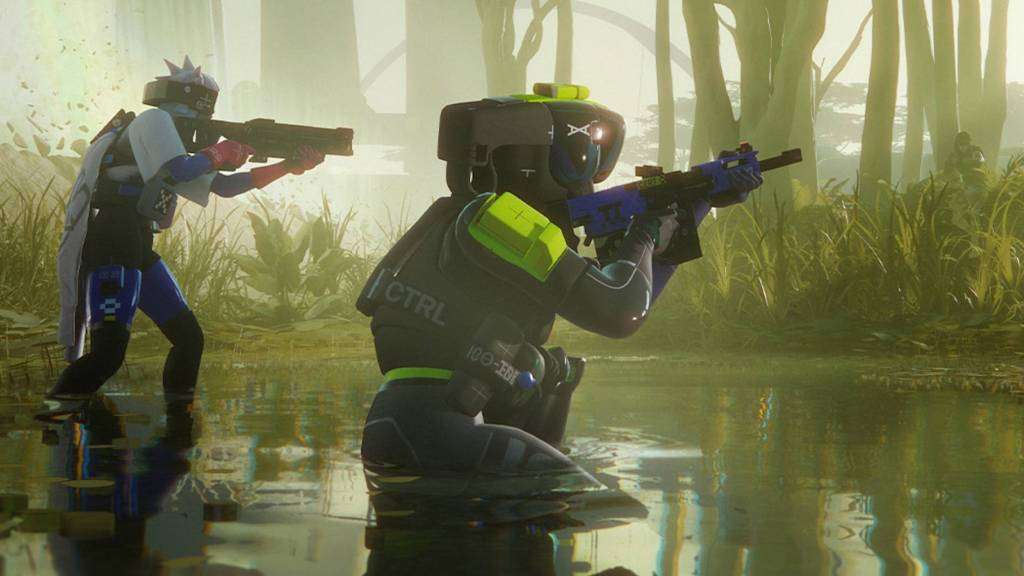
The incredible combat encounters truly shine in evenly matched battles though. Finding those evenly-matched 2v2 situations, or even 3v3 moments when a random teammate is competent, results in insanely good gameplay. While player skill variation still exists, the map layouts and gunplay feel exceptional. However, 2v2 engagements stand out as particularly balanced and feel superior to 3v3 battles. Given that duo modes in similar genre titles often strike a good balance between aggressive play and the ‘hiding’ seen in solo modes, it is a puzzling decision that Marathon currently lacks a duo option.
The intensity of these moments is significantly heightened by the permanent loss of all your gear upon death. Marathon seems designed to constantly threaten to strip you of everything. The limited storage space forces you to take your valuable gear on missions, but dying or leaving the game without successfully extracting means losing it all. While this is an intriguing mechanic, I wish the game offered some form of protection, like a weapon lock, or at least a way to recover lost items. Furthermore, I believe the different character classes (Shells) should come with a specific, basic loadout.
Marathon would benefit immensely from a separate, more conventional PVP arena mode featuring diverse loadouts, but this currently doesn’t exist. Instead, the game offers a tense, strategic shooter experience. Players who venture out with their best gear are forced into a more cautious, conservative playstyle, leading to frustration when hostile squads appear. Furthermore, minor missteps—such as a poorly timed alert or enemy attraction by a third-party player—can quickly spiral into total chaos, leaving you stripped of your valuable equipment.
Losing everything introduces an element of unpredictability to the next match. Success is a roll of the dice: you might face few opponents, or you could encounter several highly skilled “sweaty” teams, quickly forfeiting your hard-won gear—it all depends on luck.
The biggest issue, however, is the “sponsored box” – the most basic loadout – which is almost completely useless. This free gear is only really meant to be a last resort if you lose all your equipment and can’t afford a replacement from the armory, leaving you with a rudimentary weapon and minimal supplies. I’ve repeatedly tried to use this loadout to save my better gear, and I simply find it frustrating. It would be a different story if everyone started with this, but it’s utterly terrible to jump into a game facing players with elite equipment and long-range weapons when your own gun requires two reloads just to take them out. It’s even more frustrating when the first few areas you loot rewards you with nothing substantial either.
This is where I think having character classes have a default style to them would be beneficial. Give them snipers, assault rifles, hand guns, whatever, but make them unique to that style. When you take the sponsored box, give them the most basic gun in that class. That way at least you have the added advantage of modifying a gun you will continue to use, and use it in a way that benefits you as a player.
Instead what happens is you get the most basic loadout in the entire game, which puts you at a huge disadvantage with anyone that has the slightest deviation.
The current game mechanics severely imbalance the experience, which is a major flaw. Fundamentally, Marathon retains the core qualities of a Bungie game. The title truly shines when players have high-end gear matching potential enemies’ quality, which showcases what is arguably the industry’s best gunplay. Bungie clearly hasn’t lost its touch for making exceptional FPS games. If Marathon were to introduce modes like Team Deathmatch or other arcade variants, I would play it constantly because getting taken out makes me want to jump back in.
However, it’s difficult to compete when one player is minimally equipped while the other has superior gear. Adding to this disparity are the variations in player skill. I frequently encounter teams that are either as unskilled as I am or are elite, executing effective flanking maneuvers and consistently landing shots. Consequently, a significant and frustrating disadvantage can arise from a combination of gear imbalance and differing skill levels. It’s like taking an average at best player and making them even worse.
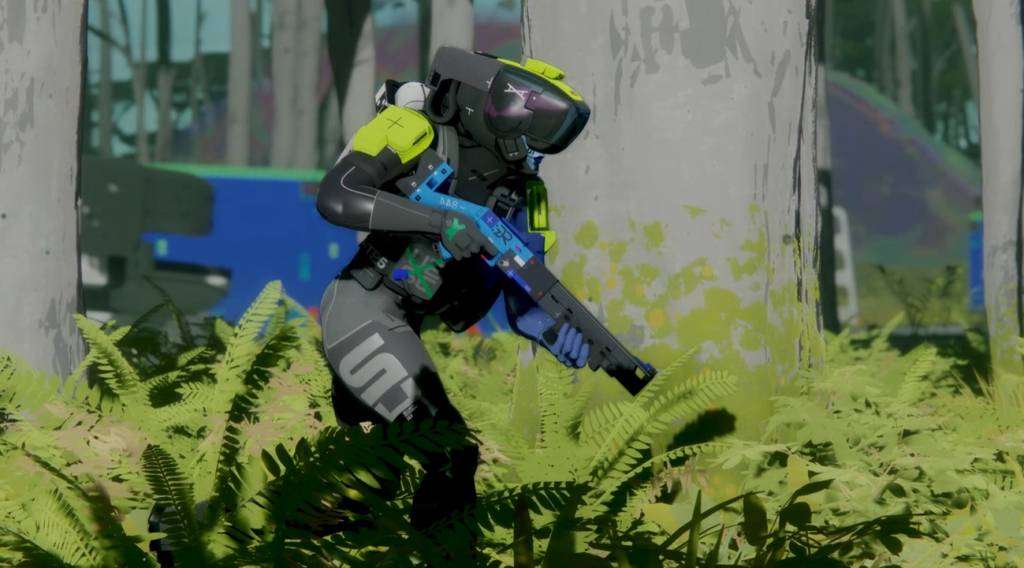
It’s also baffling why the game includes a remote “friendly” command, as I have yet to encounter anyone who actually is. I learned this the hard way after giving one team a chance. I had the advantage, but they repeatedly used the “friendly” command. Foolishly, I walked away only to be shot in the back. While I accept responsibility for letting my guard down, this pattern becomes incredibly frustrating after multiple consecutive deaths. You find matches that finally fit your skill level, make one mistake, and now have to rediscover everything again.
The core appeal of Marathon lies in its design, which emphasizes fast-paced, fluid movement. The game is exhilarating when players use their mobility to swiftly navigate the map, whether running for survival, scouting for jump points to ambush teams, finding strategic hiding spots, or simply avoiding confrontation. But the true enjoyment of Marathon emerges when teams are evenly matched and dynamic gunfights erupt.
The second core aspect of Marathon is its loot-based progression, centered on finding the best gear. The initially weak “trash gun” can become highly effective with the right loot, it’s just a matter of it being the right gun for you at that point. The gear uses a familiar color-tiered rarity system (from common to rare), and luckily nothing is overly complicated. All the loot in the game is very upfront with what it does and how valuable it is. You don’t need to sit there mid game refining tools, or crafting weapons, or any other nonsense. You pick up loot, it says “hey I do this” you decide if that’s something you want or not. While the ability to customize a gun’s function with different mods is a cool feature, It’s also a frustrating feature. You can build out a trash gun to become more of a rarity item based on what you attach to it, and it might finally function in a way you enjoy. Then you get wiped out by a squad from behind and lose it.
Character progression offers deep customization, allowing players to tailor their experience to their playstyle. Players can upgrade nearly every aspect of their character by finding loot during gameplay or by buying equipment through the Armory menu.
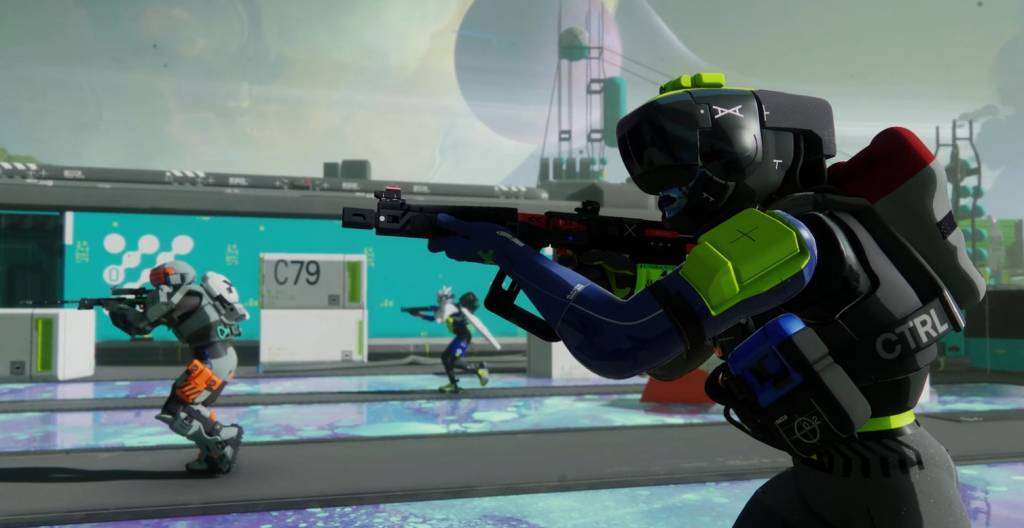
The game defines character classes through “shells,” each offering distinct benefits. For instance, some shells may grant immediate revives or deployable medic drones, while others might provide radar pulses and enemy-tracking drones, or shields for combat. Strategically combining these unique shells with a fully customized character loadout is key to team success, significantly boosting the effectiveness of any player. Each Shell has both a minor and major perk to them, with the ladder costing you 2-3 minutes of in-game time to recharge, making it key to pick the perfect moment to trigger them.
The core gameplay revolves around accepting contracts prior to deployment. These contracts not only advance the game’s story and world-building but also reward players with XP. Earning XP increases your loyalty and level within different factions, which in turn unlocks new perks, gear, and gifts. Again the gifts are kinda mixed with me. I enjoy having an assortment of items to pick up, but with the limited space in inventory I often have to avoid accepting them right away. However if i’m building towards something and lose it, that becomes frustrating as well.
A notable feature of these contracts is that many of the objectives do not require player-vs-player combat. Instead, they involve tasks like “destroy a communications hub” or explore new areas. Furthermore, all active team contracts are visible to everyone; completing objectives for teammates also grants you XP. This team-focused system is beneficial, especially if a player is struggling with a contract and joins a team that can help them complete it quickly.
The factions are strikingly corporate, which ironically gives them an authentic feel. While each one seems to harbor a darker, deeper element, they all market themselves like major companies pitching a product. Within each faction, an AI representative tracks your progress as you complete contracts. The points earned from these contracts can then be spent to unlock the faction’s unique perks and skill trees.
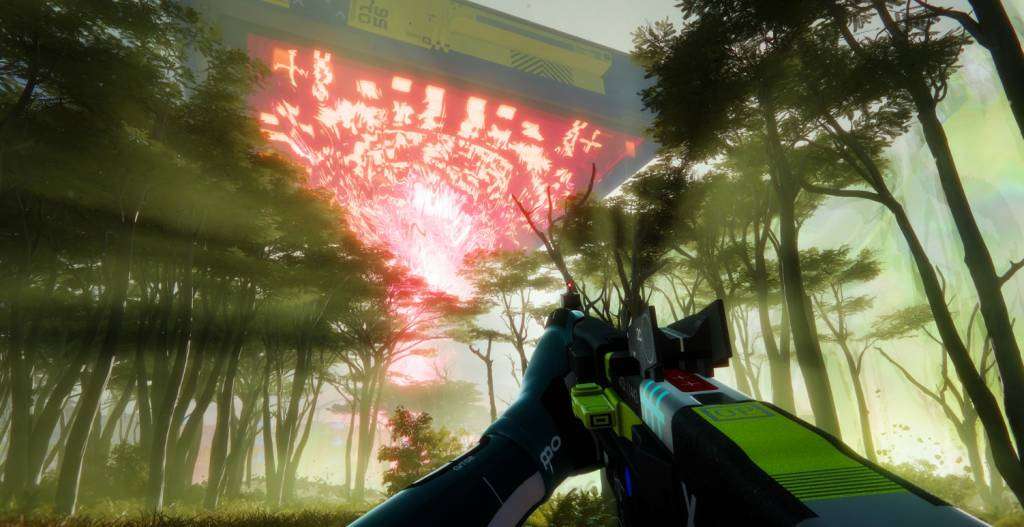
The skill tree is yet another layer that adds some imbalances to the game overall though. Each skill tree has specific perks to add to the player like additional melee damage, fall damage decline, health perks, etc… When you’re first starting out, you have nothing really to go off of. Then you need to decide which areas you want to promote, and then head in that direction with the contracts. But you’ll clearly come across players that have progressed much faster than you at many times, giving them that competitive edge.
Marathon’s slow, uninspired progression is a major deterrent. The limitation of only selecting one contract at a time artificially inflates the number of matches needed. Early contracts are trivial—simply exploring, talking, or fetching. Later, contracts split between combat and exploration. A frustrating mismatch exists: choosing combat objectives often results in numerous games with few enemies, while switching to exploration can suddenly throw you into non-stop squad fights. This inability to prepare for the next match, coupled with the one-contract restriction, feels like a forced lengthening of playtime. Some contracts also blend things together that you may not want to do. For example, one contract I had included exploring an area, taking out AI enemies, and then the last objective consisted of taking out other Marathon runners. That last objective made me not want to even bother after spending 4 or 5 games trying and failing at it.
Furthermore, the seasonal reset, where everything returns to ground zero, seems like a design cop-out. While it offers a chance to master the game and plan for the next season, I’m struggling to find any sustained attachment to Marathon. The game constantly negates progress by taking away hard-earned gear, and then the entire backend progression is reset as well. I’m finding it difficult to justify continued play when everything I unlock ultimately becomes pointless.
The season pass offers some mitigation for other issues, but it’s generally what one would expect. Fortunately, it avoids offering genuine playing advantages, focusing instead on mostly cosmetic items that won’t affect gameplay. While a few schemes do unlock weapons in the armory, those weapons have been largely inaccessible to me, and I’ve had better success scavenging weapons in the field. Overall, the season pass consists mostly of forgettable color swaps I don’t care about, and I often forget to claim my rewards. Therefore, it’s a positive change that Bungie has confirmed seasons will not expire, ensuring I can claim my loot… eventually.
Despite these issues, the game remains fun. Many contract objectives naturally draw the attention of both players and AI enemies. This might be AI bots attacking and calling for backup, or setting off alarms that are amplified by the game’s incredible sound design, with shots echoing through the valleys. By paying close attention to the sound, I frequently hear enemy teams fighting in the distance. Arriving at the area reveals the destruction left behind. The sound is so pinpoint accurate in how it bounces between the valleys that traversing the map becomes incredibly engaging. You can clearly hear battles and the distinct weapons being used, allowing you to choose whether to head toward the fight and join in or move in a different direction.
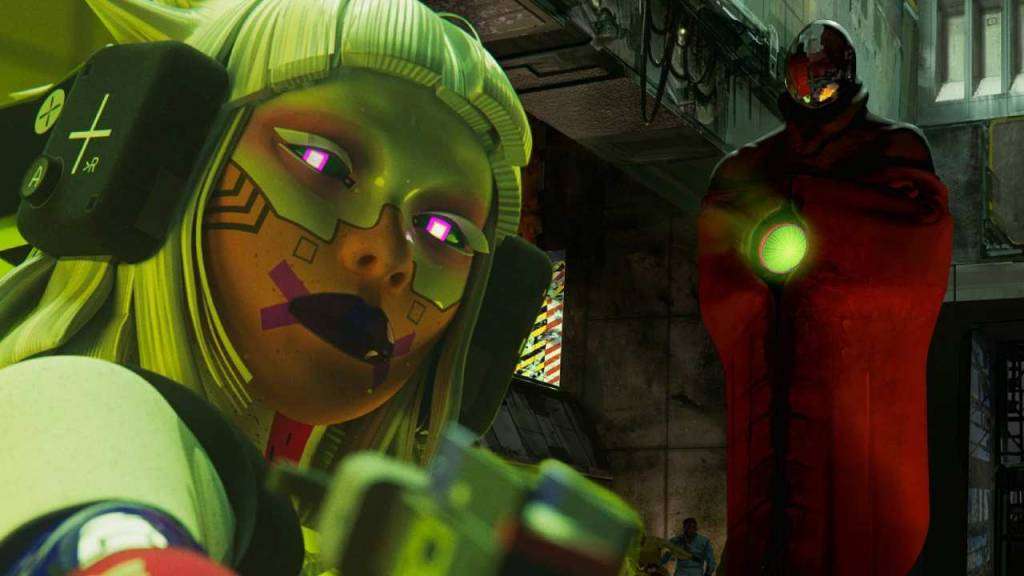
The enemy bots in the game are remarkably lifelike as well. They don’t just follow set paths; they move authentically, sometimes even mimicking real players by shouting commands or participating in the in-game spatial chat—a detail that caught me off guard multiple times. These AI combatants are challenging to defeat, and getting trapped with them can be just as perilous as encountering other players. Their quality is so high that I’d almost prefer them as a third squad member over venturing into Duo territory.
Despite the frustrating failures that constantly reset progress, my core consensus after dozens of hours with Marathon remains the same: it’s interesting enough to keep coming back. When the game is at its best, the experience is incredible. However, these peak moments are too often buried between losses that force me to switch off for the night.
The game occupies a space between Fortnite and Arc Raiders. Each match is approached as a fresh drop, but a key challenge is the uneven playing field: not everyone starts with the same resources. Some players have superior gear, others have a particularly skilled teammate, and some have just lost everything. This strategic layer is what keeps drawing me back. The thrilling elements of this otherwise simplistic PvP game come from the constant assessment of threats: are other squads more competent? What gear are they using? Are they paying attention? Adding to this tension is the inherent gamble of risking all your accumulated gear in every moment, creating unparalleled tense situations.
It’s almost like Marathon found a way to skip the whole beginning of battle royale games where everyone is scavenging for loot, and puts you near the end cycle. The issue is did you make it to this end cycle with good gear, or are you just hoping someone slips up?
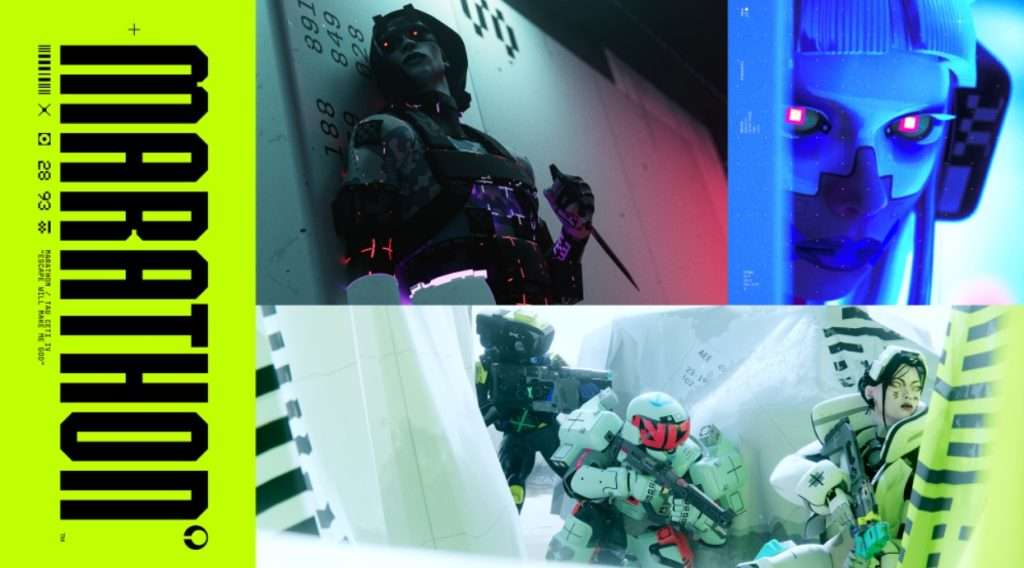
In terms of all other aspects of Marathon, everything is remarkable and perhaps that is what makes me keep returning. All the Shells are interesting to look at. The worlds you dive into are very vibrant and thrilling to navigate. The art design of every aspect of the game is truly incredible. Everything outside of losing my gear on death is honestly some of my favorite aspects in all of gaming.