

Crimson Desert is a massive game and reviewing it purely on 10-20 hours of gameplay doesn’t feel fair. I was able to start playing on release and spent all weekend playing the game, and still feel I barely touched the surface. So here are my way to early thoughts, with a full review coming later.
Crimson Desert distinguishes itself as a premier example of modern game design. The title consistently maintains engagement through emergent gameplay and a high frequency of novel mechanical interactions. The unpredictability of the game world fosters a sense of discovery that has persisted throughout my experience. In my time spent in the world, I’m still coming across moments that surprise me.
Crimson Desert
Release Date: March 19th, 2026
Platforms: PC, PlayStation 5, Xbox Series X|S
Developer: Pearl AbyssReviewed on: PS5 (Base console)
Redefining the sandbox open-world genre is what Crimson Desert does best. Aside from a somewhat unconventional introductory tutorial that may initially misrepresent the core experience, the game achieves significant momentum. Once you progress to the second and third chapters, the narrative and mechanical scope broaden into a highly sophisticated experience.
The title supports diverse playstyles, allowing for highly individualized player experiences. While the core story missions provide a structured campaign, the strength of Crimson Desert lies in its environmental storytelling and optional objectives. Extensive exploration reveals a wealth of content, including complex boss encounters and character-driven subplots, which allow for progression independent of the primary narrative arc. I took down several bosses, leveled up a bit, and made new friends before I moved the story along at all. But the story remains as an anchor point, any time I feel stuck I can go back to it and move it along as needed.
The game’s structure evokes the design philosophy of classic RPGs like The Elder Scrolls IV: Oblivion, where player agency and systemic consequences drive the experience. The integration of environmental puzzles and dungeon-crawling mechanics creates a cohesive blend of established open-world tropes and innovative design, which constantly give you things to do.
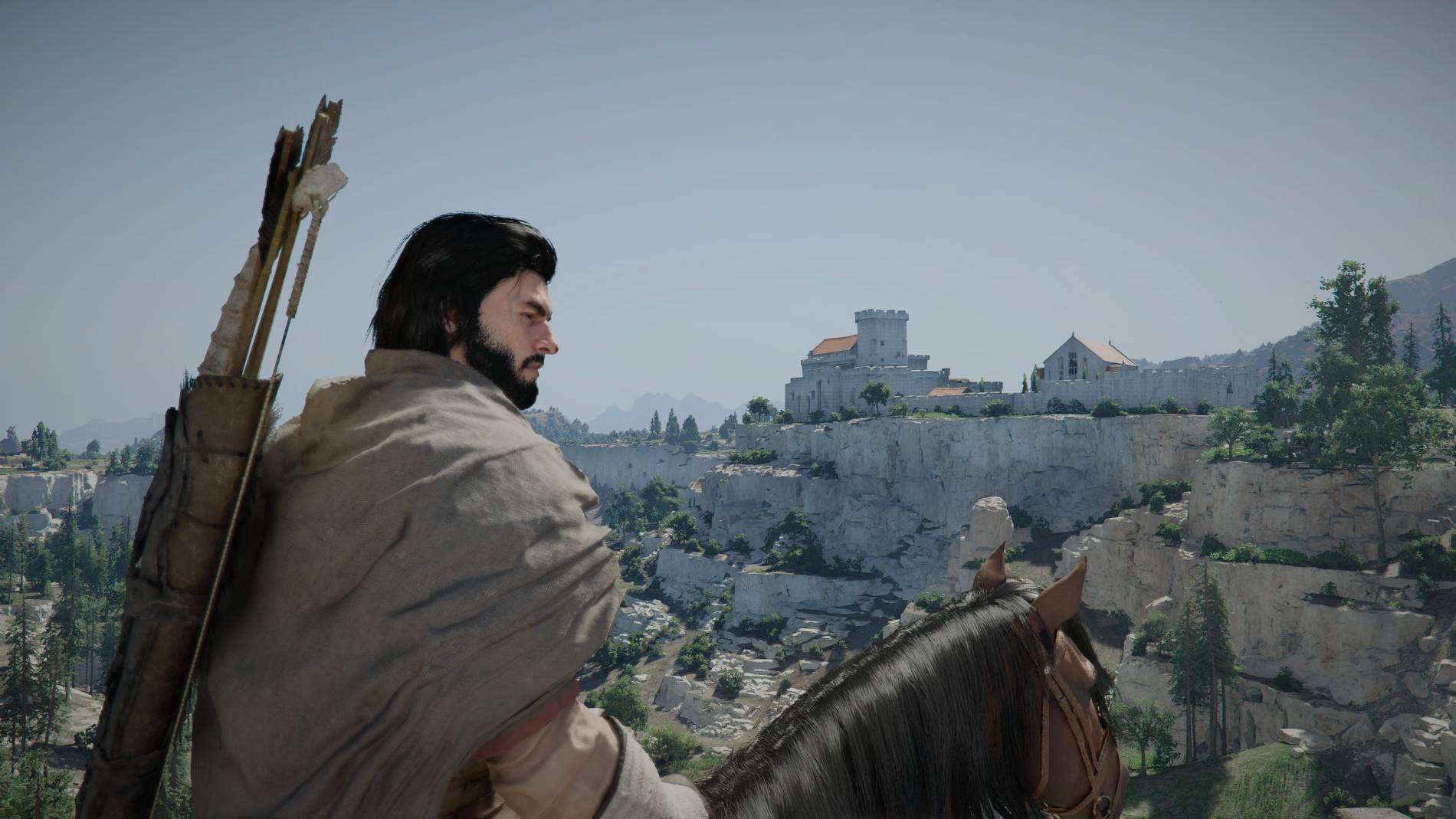
And I mean it appears to blend everything because the more I play, the more ideas are drawn in from other games. One minute I’m arm wrestling and completing mini games to earn some coin, the next I’m sneaking around a mansion and sticking my hand in fire places, then I’m trying to pet animals, then I’m hunting animals…. I mean the game goes from a settlement builder where you’re navigating resources and assigning missions like Fallout, to exploring the world like The Witcher, to magic puzzles like Zelda. And you could spend hours doing any one aspect of these, or move quickly between them all at a whim.
From a visual standpoint, Crimson Desert is technically ambitious. On the PlayStation 5, the title encounters some performance-related issues, including visible asset pop-in and inconsistent texture filtering. However, the art direction remains impressive, offering expansive vistas and detailed environments. The game even acknowledges this early on as you cross a bridge and a character mentions to slow down and take in the views, and trust me you’ll want to. One notable graphical inconsistency involves the rendering of fluid dynamics; while static water bodies are rendered effectively well, the depiction of rapidly moving water lacks the fidelity and lacks any real visual clarity. Rushing waterfalls, moving rivers etc, really draw you out of the beauty you find elsewhere.
The immersion is bolstered by a dynamic world state. Settlements exhibit visible progression, and the NPC behavior patterns contribute to a lived-in atmosphere. Furthermore, the quest design is integrated with the social fabric of the game world, where player decisions result in tangible changes to the environment and village life. It has been incredibly neat to see how things get built and NPCs move throughout the in-game day to night cycle, it all feels really authentic in nature. There are even character driven issues that could arise, like being known as a thief will have many of the in-game merchants avoid you.
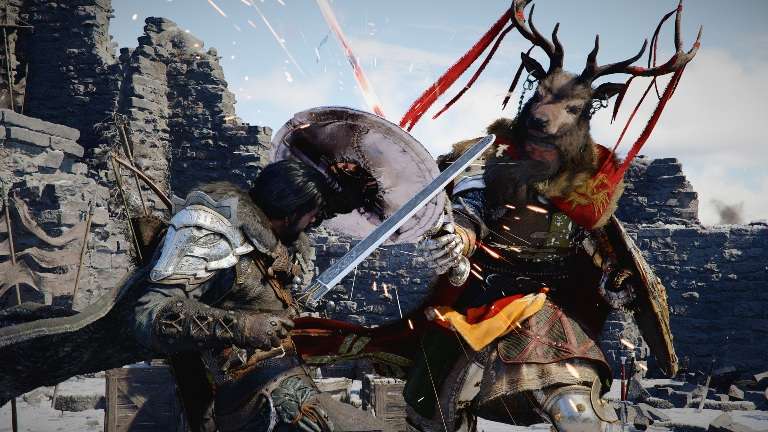
A significant achievement of Crimson Desert is its emphasis on player problem-solving. Challenging scenarios often permit multiple viable solutions, encouraging experimentation with the various tools provided. This flexibility in overcoming obstacles highlights the depth of the game’s systemic design. You can often find yourself cornered by exploring too far too early, or by making decisions that make certain scenarios harder on you. In these instances I’ve looked online for help and it’s so awesome to see how many different solutions people have found. There are ways to go about almost any area from straight forward ideas, to potentially “cheesing it” moments that somehow still feel like they were intentionally designed. But it’s even more impressive to see people point out certain things where if you did this action, it could affect something elsewhere.
I will admit I was afraid of the game becoming “souls like” with later trailers showing off the bosses and gameplay. So far during my time with the game I haven’t had this issue. I’m not a fan of souls games, and instead Crimson Desert has a good mix of button smashing combat and slow strategy based areas, which can be greatly improved by leveling up. I have yet to find a point in the game where I just want to turn it off and walk away like I did with Elden Ring.
On the same note, the game easily crafts itself around how you want to play. Diving into the skill tree you can see that the game has layer after layer of adapting itself to you. Each skill is broken down, and then broken down again. If you have a playstyle you want to use, it allows you to go in that direction with no real drawback. In fact the more you level up, the more fun the game appears to get. Being like me, and veering off to explore the world way too early, you can come across boss battles and enemy encounters that might ignite the “Soulslike” PTSD, but if you take a breather and go level up, unlock a few perks, and return then the battle isn’t so insanely hard anymore. There is a balance between knowing you can figure out a way through, or knowing you’re clearly not supposed to be in the area that early, and should probably look to return when you have new abilities.
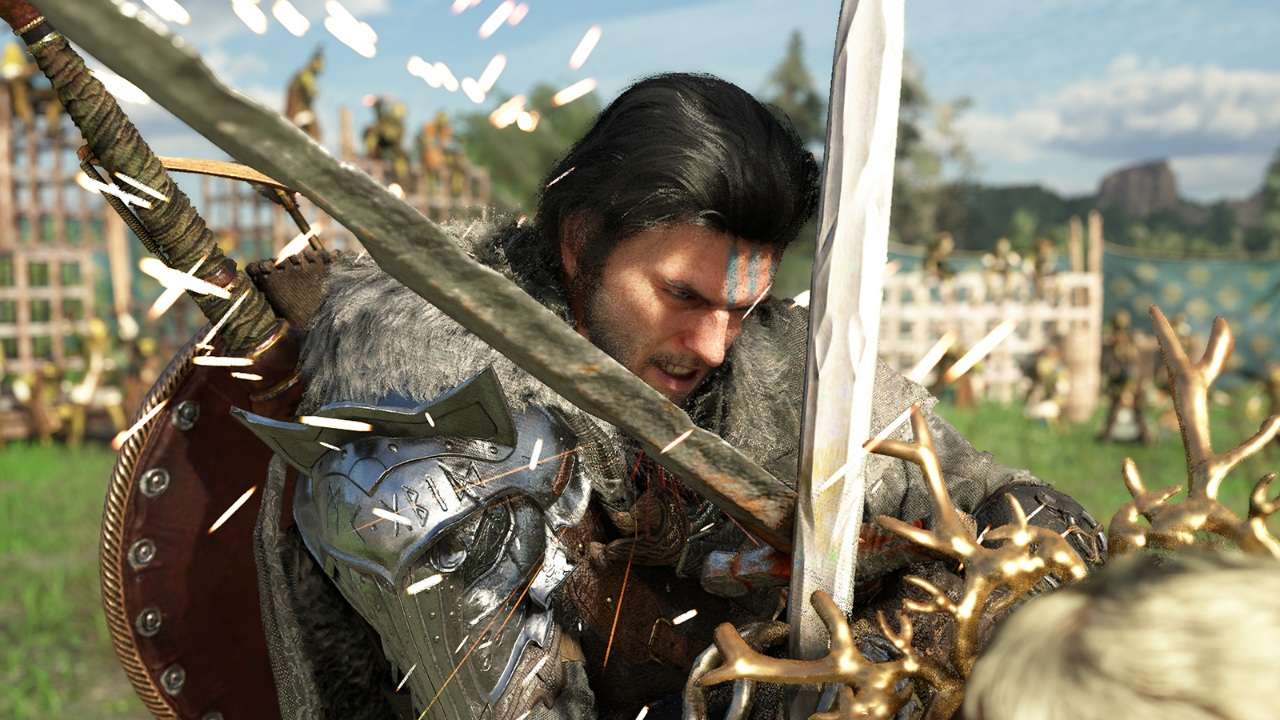
The control scheme presents an unconventional but functional approach. On a controller, the input variety allows for complex actions via rapid button combinations. While the inventory and quick-select systems are streamlined and intuitive, other mappings—such as the use of face buttons for sprinting—can feel archaic compared to contemporary standards. Nevertheless, these choices appear deliberate within the context of the game’s broader mechanical requirements, and oddly the choice overall feels like the correct idea.
Crimson Desert frequently deviates from modern industry trends in its control philosophy. While it eschews the standard “R3 to run” formula, the inputs eventually become second nature as you engage with more complex mid-game content. While the lack of comprehensive button remapping is a missed opportunity, the existing layout supports the flow of combat and traversal effectively once mastered. But it may take you a bit of time, and some frustration, to get there.
And as for characters, I seem to really enjoy Kliff. While his story so far isn’t making a lot of sense to me, as in how he dies and comes back like nothing even happened, I’m hoping it opens up more as I play. However the shallow, introverted, hardly speaks tone he has reminds me of some of my favorite RPG driven games. It’s also neat to see how kindness by Kliff is well respected, and how it appears to help him grow as a character. I’ve also met a few companions that I’m thoroughly enjoying, and the banter between NPC’s is enjoyable.
I will continue playing this week and hope to have a final review this weekend, if my opinions change vastly or not.