

The HD-2D Remake of Dragon Quest I and II is everything fans of the series could ask for.
With the release of Dragon Quest I & II HD-2D Remake, fans of the series now have the original trilogy in a remastered format. This remake follows up to the story begun in Dragon Quest III HD-2D Remake.
Dragon Quest I & II HD-2D Remake
Developer: Square Enix
Platform: Playstation 5, Nintendo Switch 2, Nintendo Switch, Xbox Series X|S, and PC
Release Date: October 30, 2025
For this review, I played the Playstation 5 version of each game, alternating between Standard and Easy difficulty.
The Story
In an interesting twist, the events of Dragon Quest I and II are actually set after the events of Dragon Quest III. In the first game, the player assumes the role of a descendant of Erdrick, who must save the world from the Dragonlord once again. This game focuses primarily on the lone hero on their quest to save the world.
In Dragon Quest II, the player assumes the role of a further descendant of the hero in the first game, when the world is once again in peril. In contrast to the first game, Dragon Quest II uses the more traditional party structure with the hero gathering a party around them over time.
While Dragon Quest II takes place after Dragon Quest I, the story is set so far apart that the games can be played in either order, there’s really no risk of spoilers.
Updated Graphics Make All the Difference
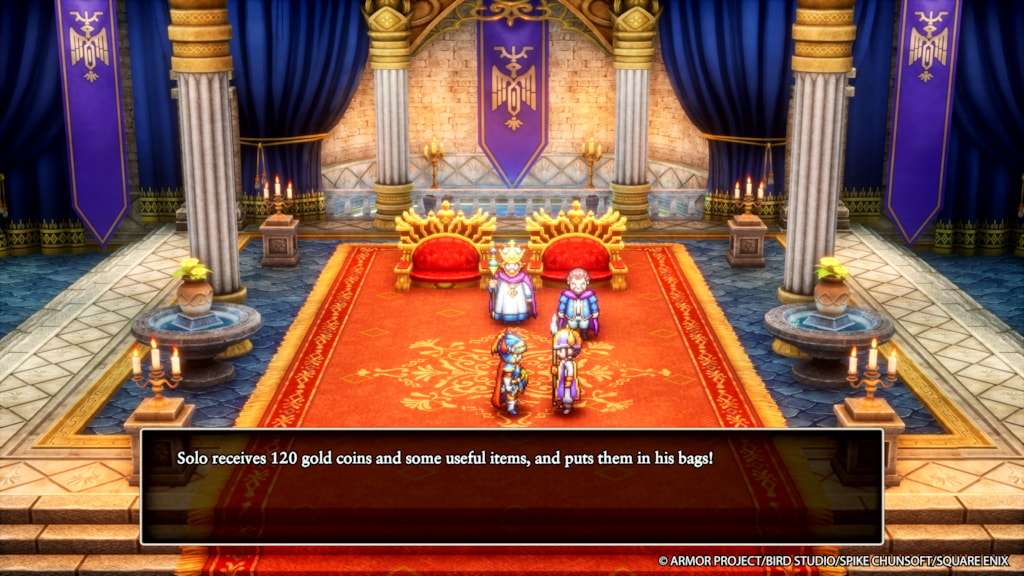
Before jumping into the gameplay, I have to say just how much the updated graphics blew me away. I first played the original Dragon Quest trilogy when they were first ported to the Nintendo Switch in 2019. In that port, there was essentially no change, it was just the original gameplay, with a basic overworld map to travel on.
In other words, what you see now looks nothing like the original games. This is now a gorgeous video gaming experience that brings the story to life, even with the limited graphics options of the HD-2D format.
The Gameplay
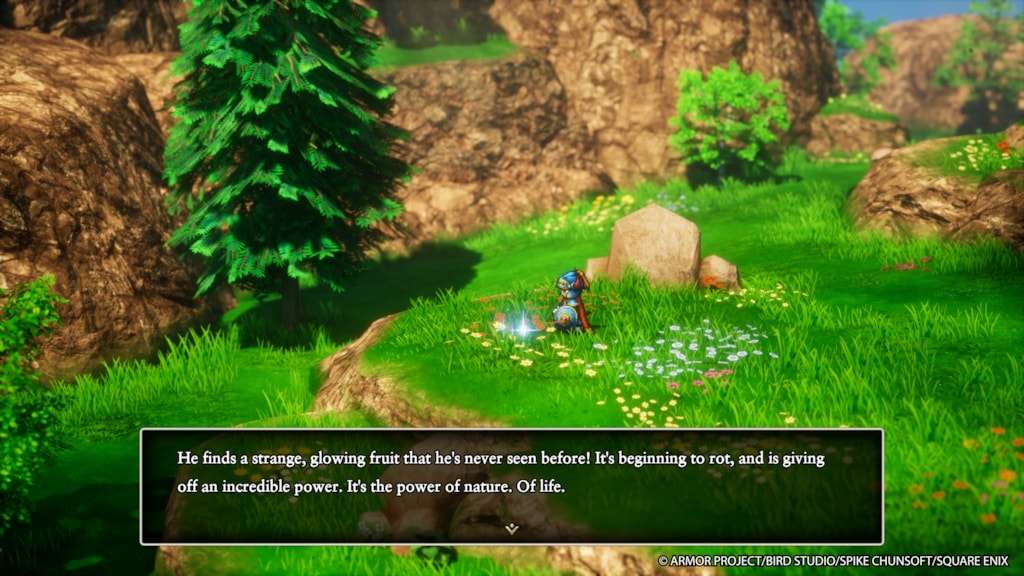
In both games, the player assumes the role of the hero and heads off on a quest to save the world from an imminent threat. Crucially, there is one major difference between the two heroes. In Dragon Quest I: the hero can attack with a weapon and with magical spells. In Dragon Quest II, this does not appear to be an option, which makes the early fights interesting if you’re a Dragon Quest player used to relying on spells to take out monsters. On the flip side, the lack of spells is compensated for with an array of physical attacks.
Primarily, gameplay consists of traversing the Overworld between important destinations on the map, such as moving from one town to the next as part of a quest. Along the way, combat is triggered at random moments, with the player able to engage in turn-based combat or flee when the fight begins.
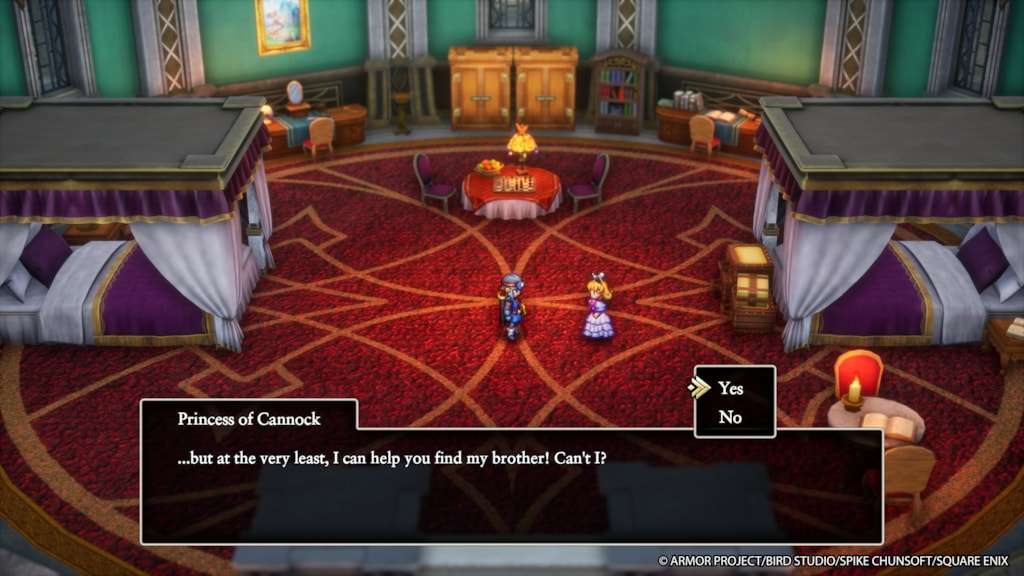
Anyone who’s ever played a Dragon Quest game will be able to fall into the flow of combat very easily: find the attacks/spells that will do the most damage, keep an eye on the party’s HP, and continue until the enemies are all dead. It’s an easy but satisfying gameplay cycle, and I encourage those checking out the game to engage in combat while traveling on foot instead of fast traveling once the option is unlocked. The experience points quickly add up to increased levels and trust me when I say you do not want to lag behind in leveling up your character.
One thing that surprised me is the difference in difficulty between Easy mode (named ‘Dracky Quest’ in the game) and Standard mode (dubbed ‘Dragon Quest’). Having played several Dragon Quest games at this point, I started out on Standard mode because I was certain I was up to the challenge.
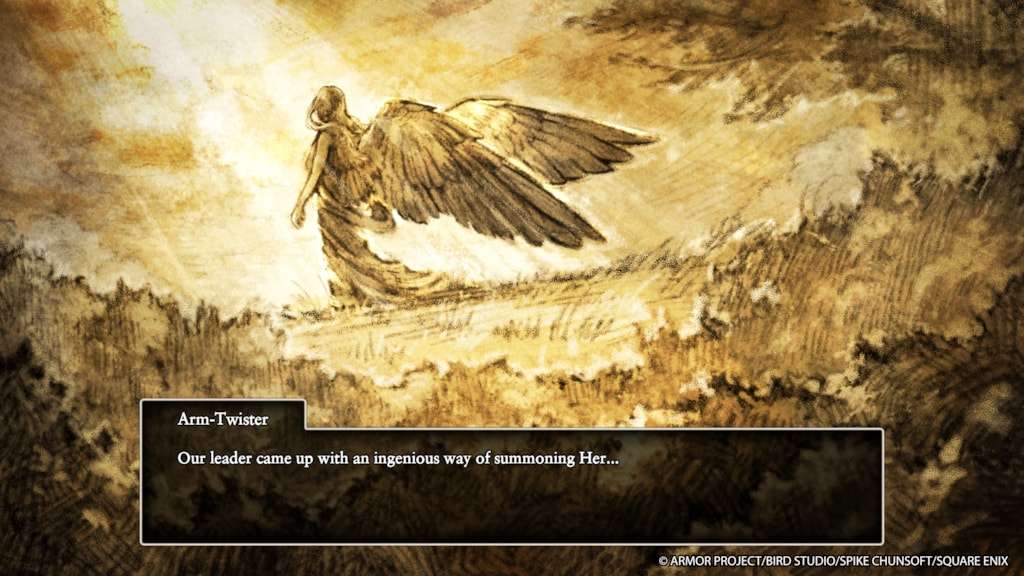
This confidence lasted right until the first boss encounter in Dragon Quest I when I was promptly defeated…and then defeated again…and again. As it turns out, Standard mode can be quite difficult even early on in the game. To test the theory, I switched the Difficulty to Easy and promptly won the battle on the next attempt. Fortunately, the difficulty can be switched at any time with no penalty to the player. Just be aware that if you go for a higher difficulty, this game is not messing around and will behave accordingly.
It Pays to Explore
One of my favorite things in the Dragon Quest series is that it pays to explore your surroundings and this remains true in this game. Whether you’re in a royal palace or in the middle of the Overworld, don’t forget to take a look around as you’re on your way to the next objective. The game world is filled with extra goodies ranging from healing herbs to weapons and armor, to mini medals that can be turned in for rewards at a certain point in the game.
There are also certain locked doors that can’t be opened until the right key is acquired in the game. Once you get the correct key, don’t forget to revisit these older areas because there are some nice rewards waiting in those chests.

An Adventure Worth Playing
Dragon Quest I & II HD-2D Remake has blown me away in every way possible. It makes the rest of the Erdrick trilogy available to a whole new audience in a way that makes everything feel new again. With the story being enriched and expanded as it is, I fully endorse more HD-2D remakes of older video games being made.
If you’ve ever wanted to dive in to the Dragon Quest series, or if it’s been a while since you played the original trilogy, I highly recommend picking Dragon Quest I & II HD-2D Remake up.