The NHL series improves year to year, but the improvements haven’t been as drastic in recent years. This year’s iteration is no different, don’t go in expecting a whole new game.
NHL 26 doesn’t represent a generational leap, but it does offer crucial gameplay improvements, starting with the new ICE-Q 2.0. When EA first introduced this, I was skeptical. My doubts about players truly mirroring their real-life on-ice personalities remains unconvincing. Iconic moments like Ovechkin reaching his one timer spot in open ice on powerplays remains to be seen, but the technology did do a lot in terms of playing AI opponents.
NHL 26
DEVELOPER:EA Sports
RELEASE DATE: September 12, 2025
PLATFORMS: PS5, XBOX |S
Instead players are once again heightened by their “X-Factor” attributes which will give certain players on each team perks and attributes. Ovi of course is a god of one timers, and will occasionally find his spot, but he won’t be drifting in wide open ice like you would expect in a real life situation. Instead if you manage to get the puck to him, his one timer will be an easy snipe goal, almost regardless of the traffic in front of him.
With ICE-Q 2.0, the AI has become considerably “smarter,” diminishing the need for distinct personalities. The new features enable the AI to think more organically throughout each play, incorporating percentage chances at specific moments. This includes decisions on shooting, passing opportunities, player positioning on the ice, and attempted moves. This leads to a much more organic AI playing style, a significant improvement from last year’s AI, which was programmed to consistently execute the “perfect play.” That style often resulted in repetitive front-of-net plays, easily countered by a strong hit or lane blockage, but the AI continued to always set up the same identical play.
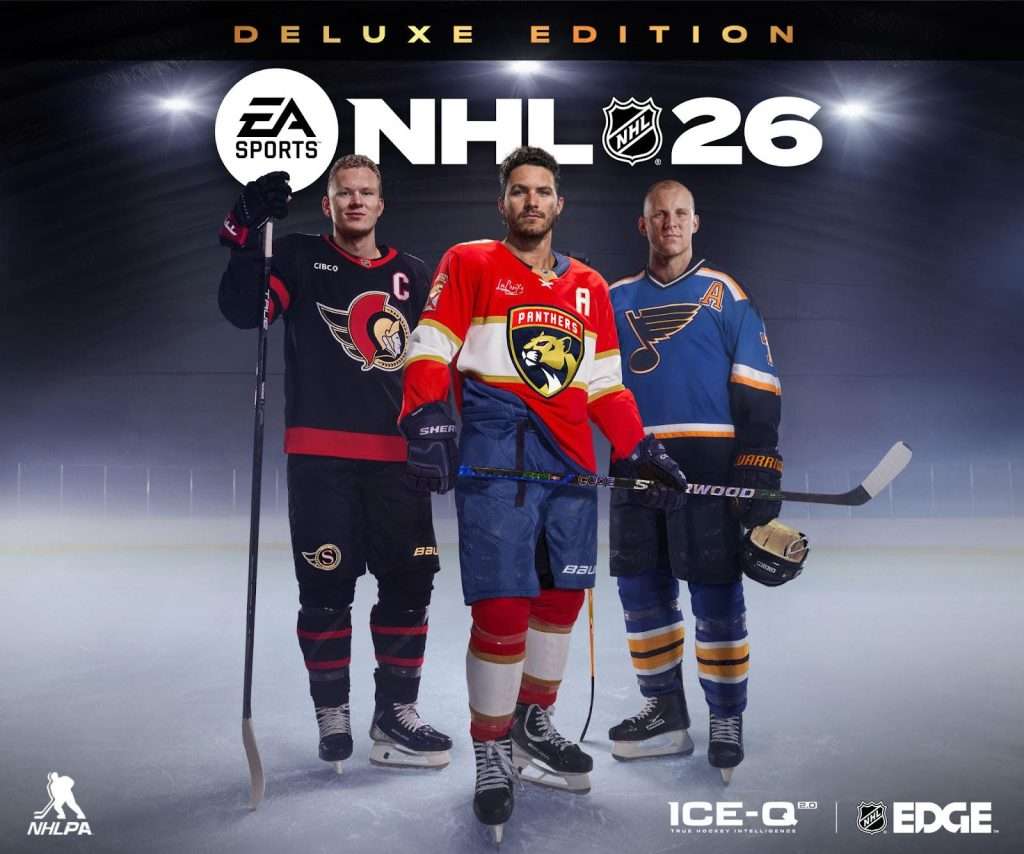
With NHL 26 the AI will think about the position of players on the ice, the puck, and the options it has at that specific moment and take the highest percentage chance in the moment. This leads to not only more organic plays, such as how it enters the zone, but it also allows the AI to be vulnerable to mistakes. You will finally see the AI miss a pass, or put a puck in a tough zone on accident, and you have the ability to quickly capitalize on it. Similar to real life situations you can often create breakaways off a broken high zone pass, or have an odd man rush due to a broken play.
That’s not to say it is perfect by any sense. I have had several moments where the AI appeared to be abruptly confused and just froze in place. I watched my own team in multiple moments get themselves in an odd situation, and instead of chasing the puck in open ice they just outright stop. It does work a majority of the time, but these moments seem to happen to me at least once per game. It feels very similar to last year when the AI would randomly have an edge and kick into superstar mode, where the difficulty level is abruptly heightened due to some momentum swing, which is still apparent in this year’s title. However the handicap of your players suddenly becoming useless leads to a lot of encounters that aren’t necessary.
The core issue of the franchise still remains unaddressed though. Despite EA’s claimed improvements to goalie animations and gameplay, scoring continues to rely on intricate, “ballerina-like” maneuvers on the ice. I find this persistent design choice, which has been present for years, frustrating. The ICE-Q enhancements make executing these moves even more challenging, consequently making organic goal-scoring unnecessarily difficult. Without these elaborate stick-handling movements, getting the puck into the net seems nearly impossible. Conversely, successfully performing such a move almost still guarantees a goal nine out of ten times. I would much rather set up plays on the ice, move the puck around, and score off deflections and organic movement like promised, but I don’t feel the leap in this direction is enough to say anything was fixed.
Instead goalies, much like the players in front of them, will make in the moment decisions that will reflect on the game itself. Goalies will leave their net to press a poke check, they won’t constantly make glove saves, and they won’t immediately cover the puck when there is no reason too. It makes faking out the standard animations with ballerina-esque moves all the more complicated when the goalie literally jumps into the play to disrupt you. However it isn’t enough to warrant entirely avoiding these plays. Dancing around mid ice will still lean favorable shots in your direction for zero reason at all, just because you dangled the puck a little.
Intricate gameplay details have been significantly enhanced, making certain moves more challenging to execute. I found the poke checking to be a vast improvement over the previous versions. You can now effectively use your stick to impede opponents, precisely hit the puck, and do so multiple times without incurring a tripping penalty as easily. Penalties overall appear to be improved thanks to the ICE-Q update, meaning I’m no longer randomly playing short-handed due to sudden interference calls on AI teammates. The entire team seems to collapse and break out of the zone exceptionally well, demonstrating strong awareness of potential plays and zone coverage.
These changes, again while not entirely dramatic, vastly improve the overall gameplay and create unique challenges on a per game basis. I just wish scoring a goal was on the same level.
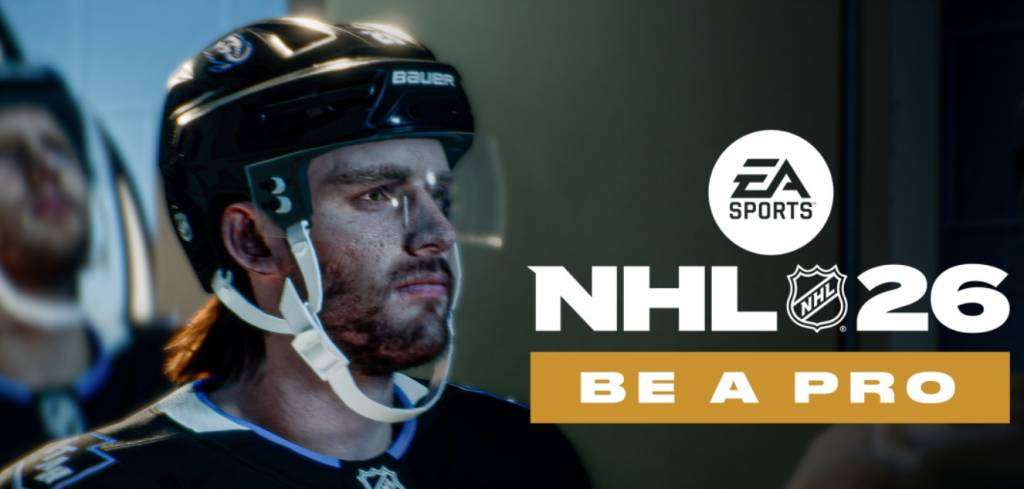
Be A Pro, Kinda
Be A Pro seems to be the central focus of the game this year, with other modes being the focus in previous years. There were some substantial upgrades here in terms of focusing more on you as a player, however there are some balancing adjustments that need to be addressed quickly.
The improved mode allows players to quickly train and set up their X-Factor perks, streamlining player customization. This new approach significantly reduces the previous grind, enabling players to focus on skill improvement in their chosen playstyle almost immediately.
That’s the good news, the bad news is that it isn’t straightforward. After you gear up and get going, things slow down dramatically once you get drafted. New attributes like “health” are added in, and you only get 6 energy points to use in every segment. Early in your career you would assume being a younger player you’d have more stamina and health to push hard into other attributes, but instead you’re spending long stretches regenerating sleep, or you risk a ding to your overall attributes for not doing so.
The game also added plenty of (unskippable) cutscenes to make it more story driven, which is a love it or hate it addition. But the uniqueness ends pretty abruptly once you get your first debut game. I’m not sure why so many visual upgrades were added in, but yet unique celebratory events were brushed over with no regard. Your first game “should” consists of the iconic lonely skate. Your first goal should get you a taped and signed puck ceremony in the locker room. But it all starts to dwindle to standard overlays.
Of course upon being drafted and failing to make the team you end up completing challenges in the AHL to be called up. This whole aspect is done great. You get plenty of ice time, a lot of the minor drawbacks in NHL 25 were polished over with the ability to level up and work on your character. Even the in-between moments were somewhat fixed with more life like press conferences, instead of grueling coach meetings, which dynamically change your character and how your team approaches you.
But once you get called to the NHL it becomes more of an RNG event with aspects out of your control determining your career. You barely get ice time, sometimes going whole games without seeing the ice, and then you get criticized for not contributing when your team loses. The game takes way too long to send you back down to the AHL, or give you a proper opportunity, and gets to the point where you almost rather be a superstar in the AHL because every time the NHL opportunity arises you’re shoved off to the 4th line with no ice time.
HUT
Just like before, I spend little to no time in this mode. I don’t see many changes that warrant me to change my mind here. HUT, for those that don’t know, is the card pack mode for the NHL series. You buy packs of digital cards, and hopefully get something good to make a decent team. The offline mode is welcomed, where you can play a 18 game season against player created teams, but it still isn’t making me want to spend money opening random packs. In my quick experience with the mode, there was nothing making me want to return.
Presentation Is Still Alright
I said in a previous iteration that EA needs to take over broadcasting with a lot of their on-ice presentations. A lot remains unchanged this year which is both good and bad. It’s good because it’s fairly decent, the only drawback being the awkward added celebrations after goals that ruin the flow of camera work. The bad is that the personalization between teams and awards hasn’t been polished either. Some arenas have particular songs and sounds, or even intros, that I’d like to see introduced in the game. I mean if the Coyotes still existed, you’d have “Howlin for you” play after goals for example. But none of these team specific presentations are there, and much like Be A Pro, it’s all template based with no depth.
Overall NHL 26 suffers from going in the right direction, but not changing enough to warrant a whole new game. If Be A Pro is your preferred game mode, then this update is for you. If you prefer any other game mode, it’s probably not enough of a change overall. While the mechanics are moving in a great direction, it also became frustrating to score goals because the core issue isn’t fixed, it just became more complicated to pull off.