
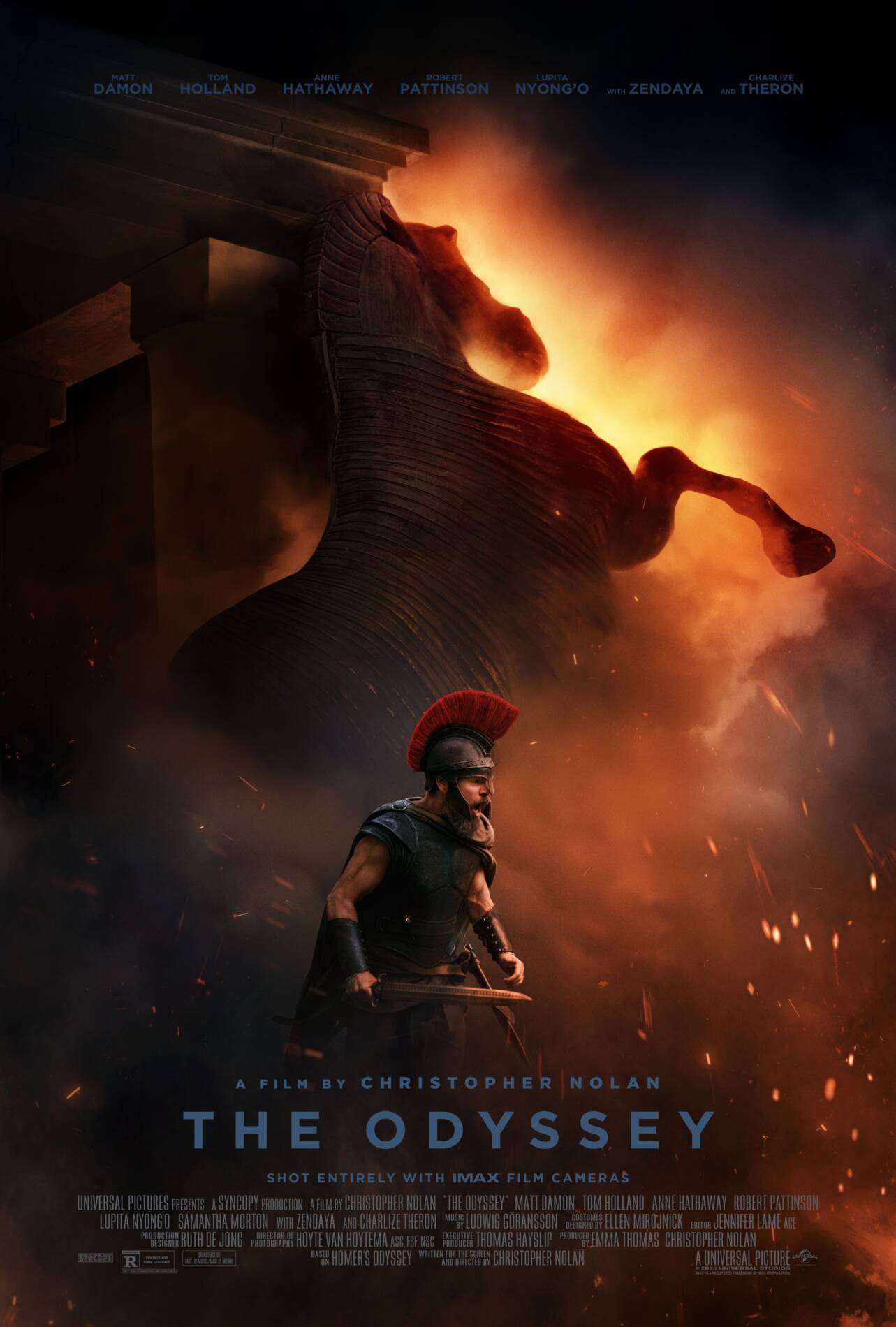
Christopher Nolan’s long anticipated take on Homer’s The Odyssey has arrived; delivering an impressive adaptation that balances mythology and modernism.
The Odyssey (2026)
Directed By: Christopher Nolan
Written By: Christopher Nolan
Starring: Matt Damon, Anne Hathaway, Tom Holland, Robert Pattinson
Release Date: July 17, 2026
Like all great stories, there are no shortage of adaptations for The Odyssey. This latest one, however, may have been the most anticipated of the bunch. Coming from Christopher Nolan, sporting a blockbuster budget, and packed with all manner of acting talent it’s an epic film in just about every sense of the word. Pretty much all of the hyperbolic statements you’ve heard thrown out there about the film are largely justified and I find myself eager to watch it again.
What’s Old is New
I’m not going to sit here and go through the basics of the story. I mean, it’s The Odyssey, I think we can skip the plot synopsis. Instead, let’s talk more specifically about Nolan’s take on the material and how the changes made to the story do a great job of modernizing it for a new generation.
As far as adaptations go, I loved how Odysseus’ (Matt Damon) story unfolds in the film. One Nolan’s storytelling trademarks is how he plays with the timeline of events. Odyssey is no different and features a non-linear approach to the narrative. The story essentially unfolds across two different times (maybe three depending on how you look at it). There’s the current story, focused on Telemachus (Tom Holland) and Penelope (Anne Hathaway) dealing with the suitors who’ve taken over their house. Then you have Odysseus’ winding journey combined with the end of the Trojan war, which are told via flashbacks.
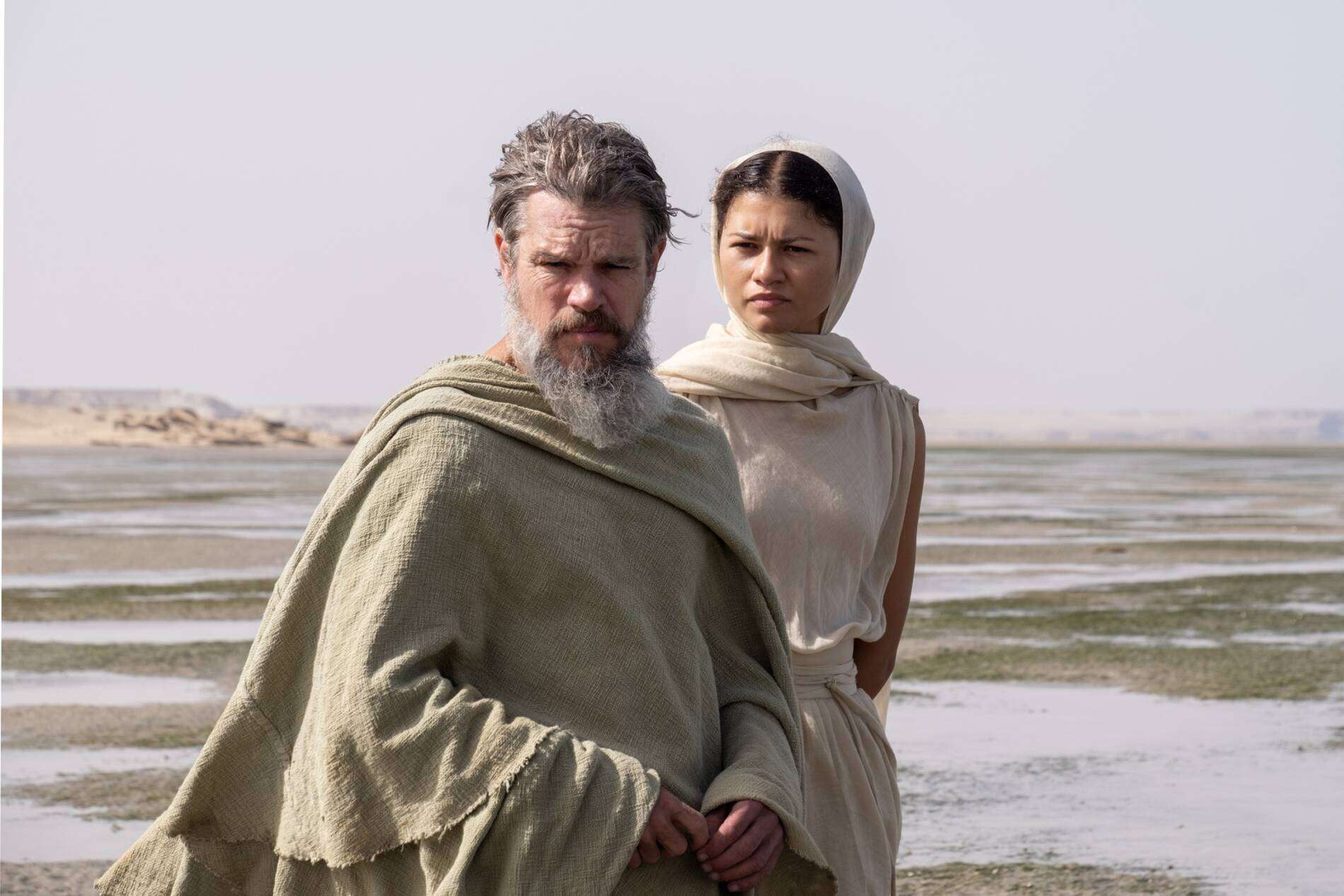
How the film balances these stories is impressive; managing to find natural points in the current timeline to cut back to the past and fill in some information. The result feels like a pair of concurrent stories being told, both engaging in their own way, that ultimately come together in a pulse-pounding, emotional finale.
The Odyssey is a massive story and almost feels more episodic in nature. Compressing all of that into even a three-hour runtime is no mean feat, but Nolan’s non-linear approach smooths out much of that issue. The pacing is tight all around, with only a little slowness in the final act, which makes the extended runtime fly past.
I don’t say this lightly, either. Even many of the three-hour movies I enjoy still feel like three hour films, regardless of quality. Odyssey, however, manages to be the exception. It moves at a quick pace, leaving you little opportunity to dwell on the amount of time passing…or even the need to use the restroom.
Crafting a Mythology
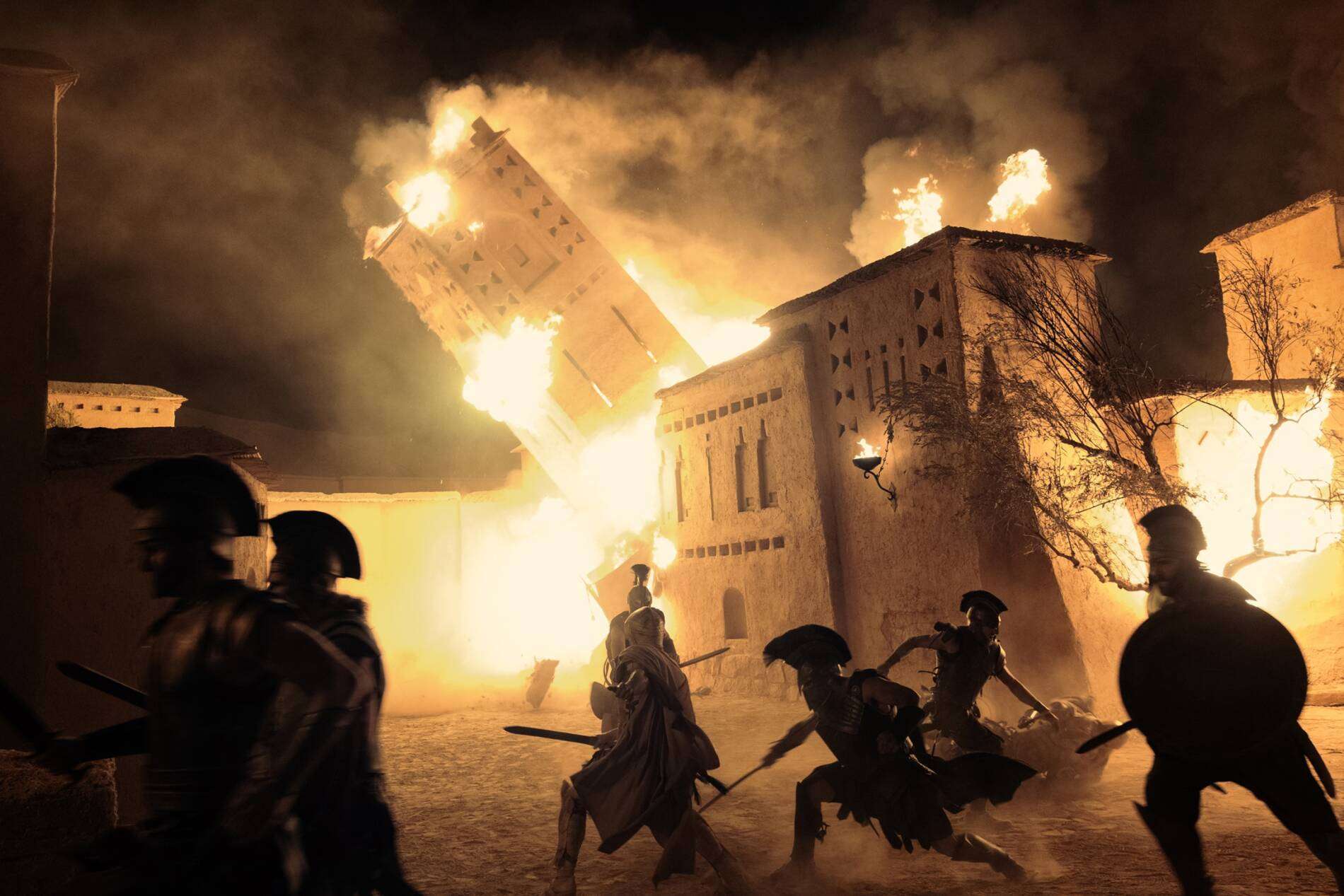
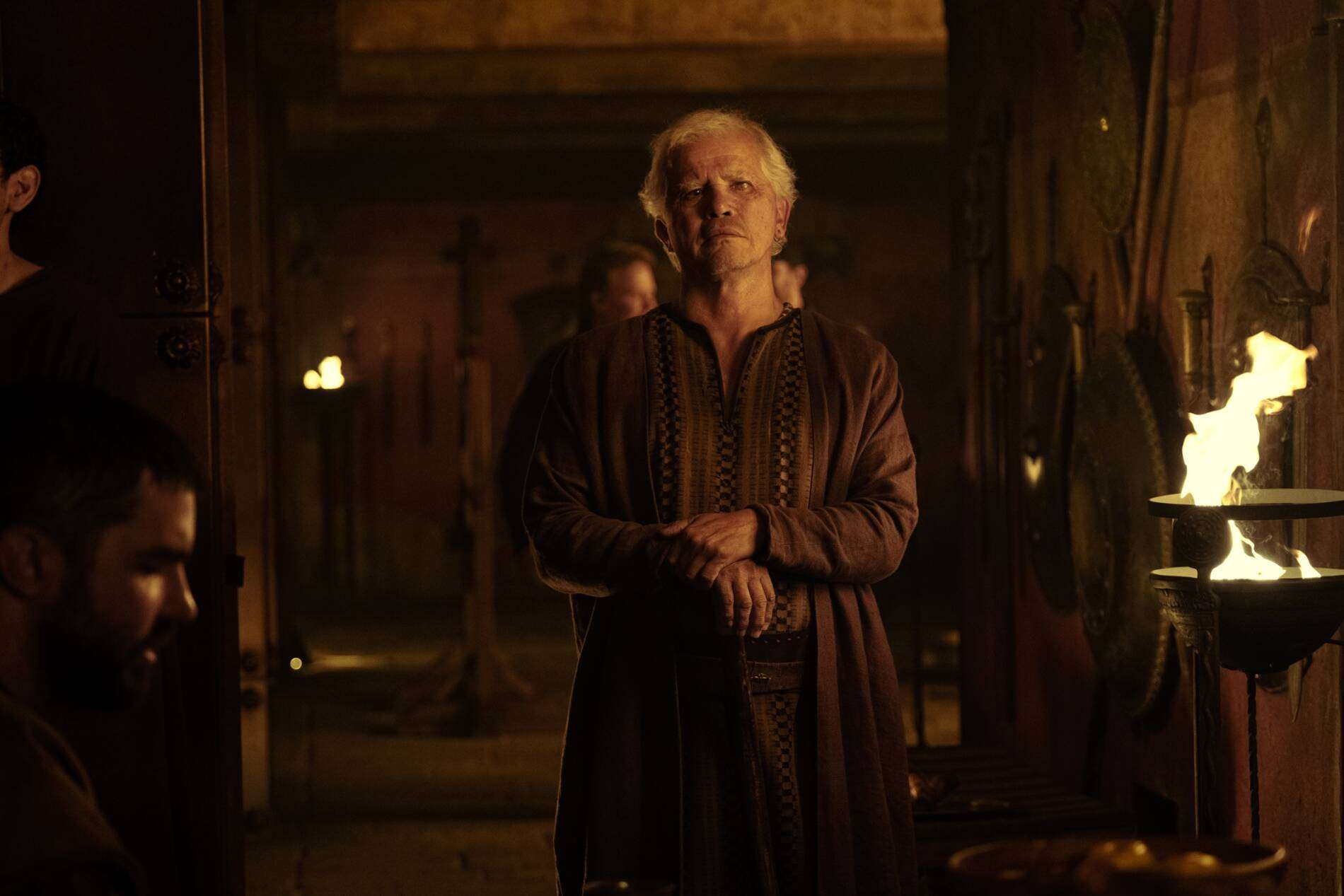
Visually it’s an incredible feast, and no, you don’t feel like you’re “missing” anything if you happen to watch it in a regular theater format. The action sequences feel appropriately epic, and even the smaller moments bring a sense of weight and gravitas to the screen (something Nolan has always excelled at).
I hate to say it feels “grounded,” another Nolan visual trademark because the film itself doesn’t shy away from the fantastical elements, but I’m honestly not sure how else to word it. It’s not going for realistic in the way you’d treat a historical type film—Agamemnon’s badass but wholly impractical armor attests to that—but the film sets a distinct visual tone that allows for both realism and fantasy to exist side-by-side in a dramatic way.
Part of me wished to see Nolan get a little crazy with the fantasy designs of some things, but how it’s handled in the film works much better in terms of overall tone and story. Rather than feeling big and over the top, the moments dealing with gods and monsters are given a distinctive unsettling feel. Which is only appropriate given we’re placed firmly in the perspective of mere mortals. It makes sense that magic and such would feel more terrifying than awe-inspiring.
An Abundance of Talent
I don’t want to harp on this too long, but I can’t help but remark on the outstanding performances in the film. The Odyssey serves as a prime example of the old adage, there are no small parts. The movie is jam-packed with a bevy of stellar actors, but honestly the majority of the cast doesn’t have a lot of screen time.
In such a sprawling story, there are a ton of characters to work with. So it makes sense that some only get a few minutes of story all together. And yet, every single actor makes the most out of every scene. Even with just a few moments of time, they become instantly engaging and emotionally dynamic.
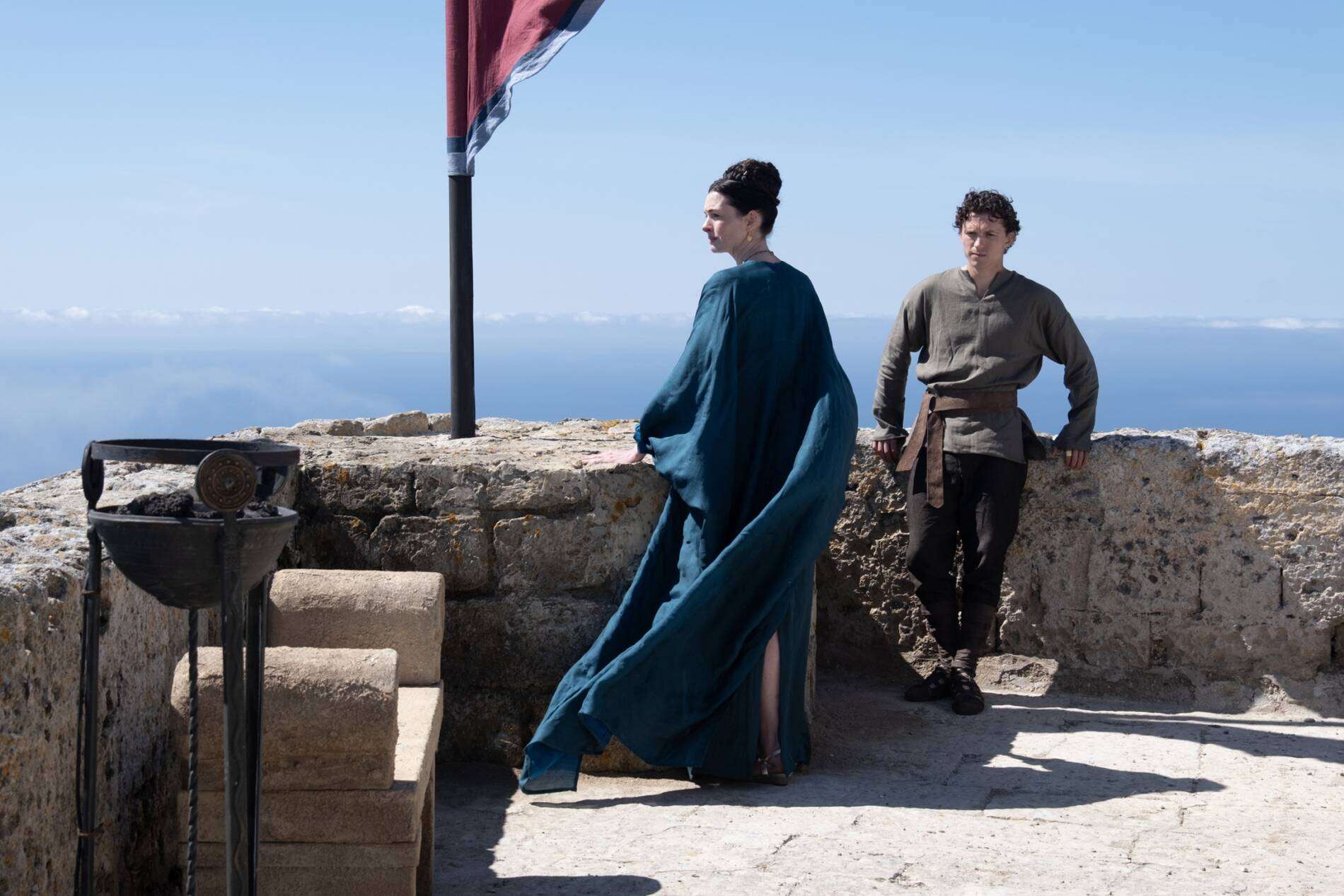
Even without the vast history we already know about the story in general, the characters would stand out. They feel lived in. Brought to life in a way that makes you feel like you’re genuinely looking in at a specific moment in their lifetime. There’s the sense they had lives, hopes, and feelings before we met them and will continue to do so (well, some of them) long after the story has stopped.
I’ve sat and tried to figure out which of these smaller roles stood out to me the most, but it feels like an impossible task. Every time I feel like I settle on one (John Leguizamo’s Eumaeus is an easy choice), I can’t help but be reminded of another defining performance, like Elliot Page’s Sinon, or Samantha Morton’s Circe. Himesh Patel’s turn as Eurylochus is likewise unforgettable and Robert Pattinson is phenomenal as the weaselly Antinous.
Nolan has always been more of a story focused director, leaving some of the characters to feel a bit generic or archetypal. In this regard, The Odyssey is easily his best film in terms of character work and directing actors. Everyone brings the goods.
Change is Good
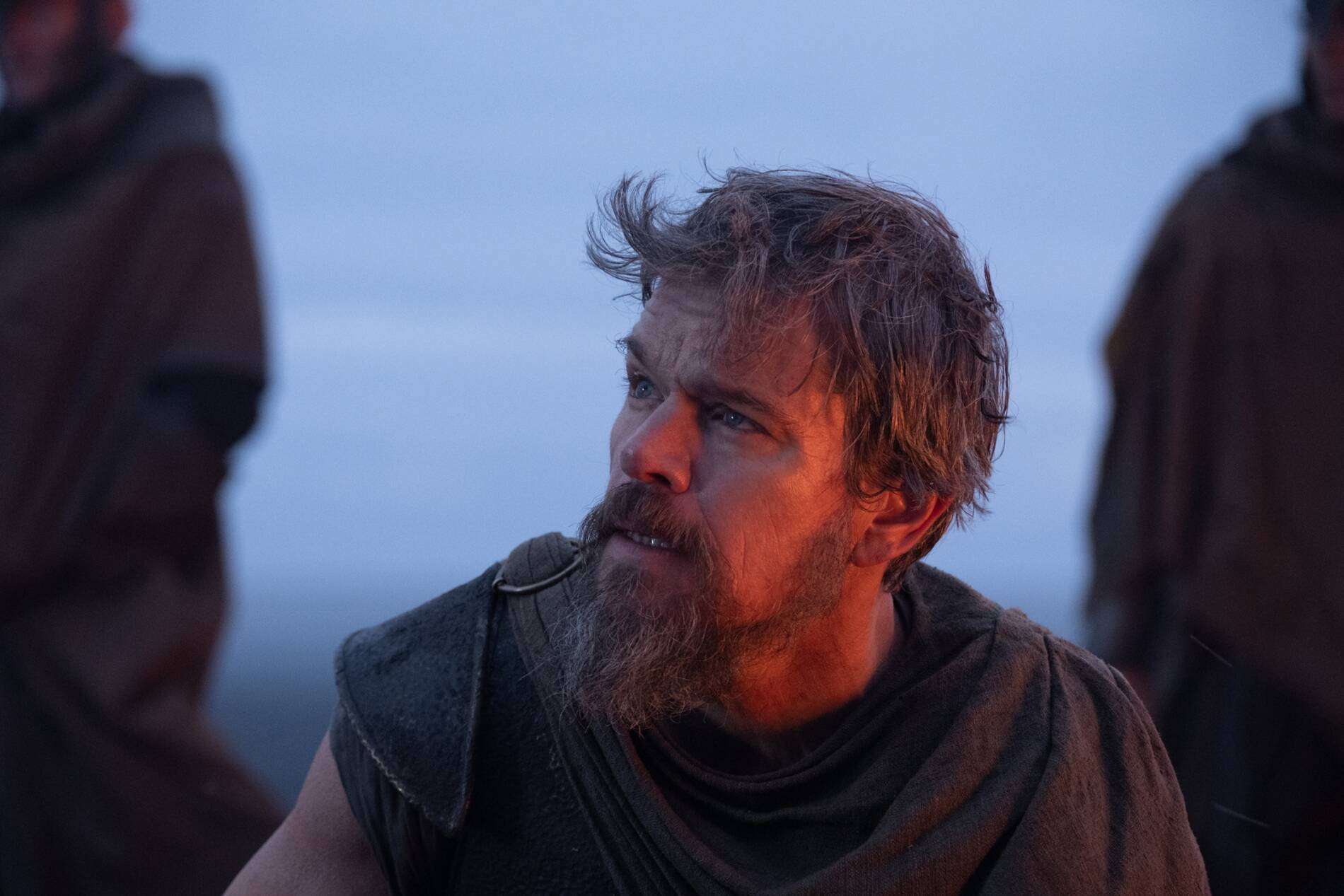
The Odyssey isn’t a direct adaptation of Homer’s epic and features a number of changes to the mythos. I’m not going to detail them all (we’d be here all day). Instead, I’ll simply say pretty much all of the major changes are for the better. The shift allows for more modern themes to take root, giving the film a more contemporary feeling despite its Bronze Age setting. The result is a movie that feels like it stays true to the intent of the source while using its mythology to embrace newer generations.
What I loved most about Christopher Nolan’s take on the story is how the film transforms Odysseus himself. Rather than the story being a tale merely about his hubris, The Odyssey is an examination on the cost of war. The reality of what it means to follow a leader, and the lengths one will go to for “victory.”
Let’s face it, Odysseus in the original text is not a great guy. He has no real loyalty to his family, especially Penelope, and just about all his choices are made out of ego rather than a desire to get home. It’s an aspect most modern takes on the character have shied away from, as those parts serve as a contrast to the more modern “hero” audiences expect.
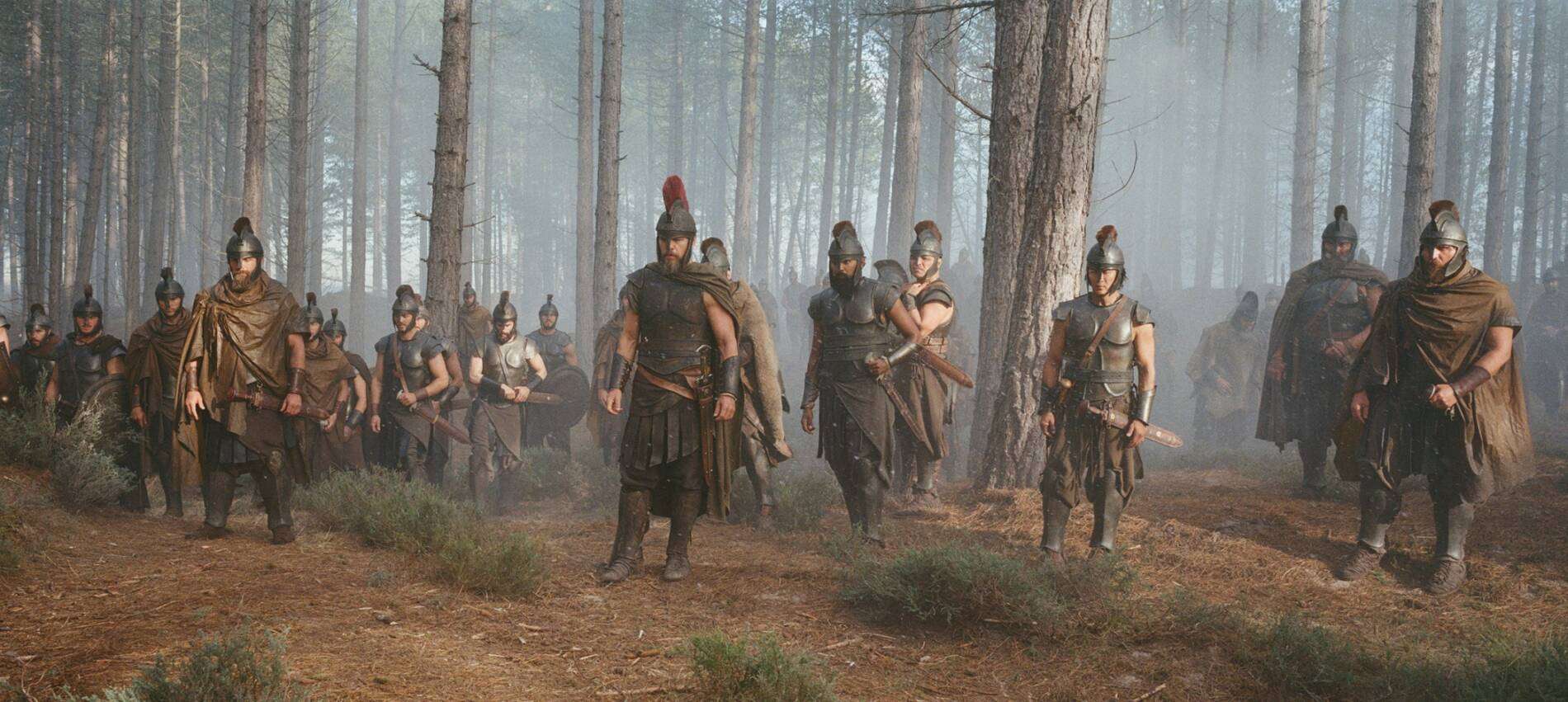
Matt Damon’s Odysseus is a more tragic figure. He’s haunted by the things he did during the war and the person it turned him into. He’s haunted by his failure to save his men. Not just from the craziness they encountered on their way home, but from themselves. Worse is he knows their behavior falls squarely onto his shoulders. This inability to maintain the honor of himself and those soldiers he was able to save on the shores of Troy is what drives his decision making in the film.
We can see it when he confronts Circe, who’s transformed his men into the beasts they’ve become. He knows what’s come of them in both the literal and figurative sense, but still thinks he can save them. Firmly believing it’s his fault they went down this path (though there’s a case to be made this is human nature in general), he feels responsible for pulling them off of it. Odysseus’ insistence on “defying the gods” is more about his steadfast belief that he can still bring his soldiers back from the brink of barbarism, rather than his own hubris.
Obviously Odysseus does some sketchy stuff in the movie, but his actions are driven by being haunted by the war. His failure to save his men, and his failure to save himself from becoming a terrible person in the process. This approach keeps him devoted to his wife and son (despite the fact he doesn’t truly know Telemachus) and allowing him to fulfill that heroic role without the problematic baggage.
Controversy
Real quick, I want to talk about the “controversy” surrounding the film; namely because I’ve seen some of the biggest online chuds whine about how many reviewers aren’t discussing this “very important” issue.
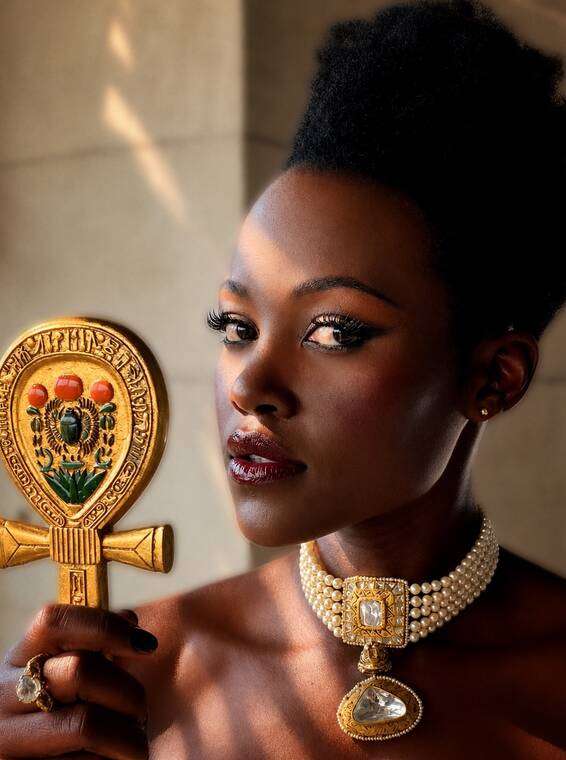
This IS NO ISSUE WITH THE CASTING. It’s a big ‘ol fat nothing-burger. Casting one of the most beautiful women around (Lupita Nyong’o) as Helen of Troy is pretty great! None of these arguments about “authenticity” are being made in good faith, only YouTubers eager to find some cultural aspect in which to ply their grift. In a movie that features a cyclops, a six-headed scylla, and GODS, they’ve decided a black woman as Helen is a bridge too far.
Any rationalization about cultural relevance is merely justification for their bigoted nature. It’s not worth listening to, nor do they deserve the clicks. Thankfully, the impressive box office debut shows how much of a bubble these goobers are in.
If there’s any real controversy to be had, it’s Nolan’s continued inability to write women characters who aren’t merely archetypes or plot devices…But that’s a topic for another time.